Home of the Practically Perfect Pink Phlox and other native plants for pollinators
Showing posts with label Purple Phacelia. Show all posts

Tuesday, April 5, 2016

The thing about biennials

Biennials require two growing seasons to complete their life-cycle. The first year is vegetative growth; the second year, they flower and produce seed and shortly after, they die. They're usually quite prolific and will set seed well, but, you'll only have flowers every other year. If you want to have blooms every year, you've got to put a little bit of effort into making that happen.
My favorite native biennial is Phacelia bipinnatifida.
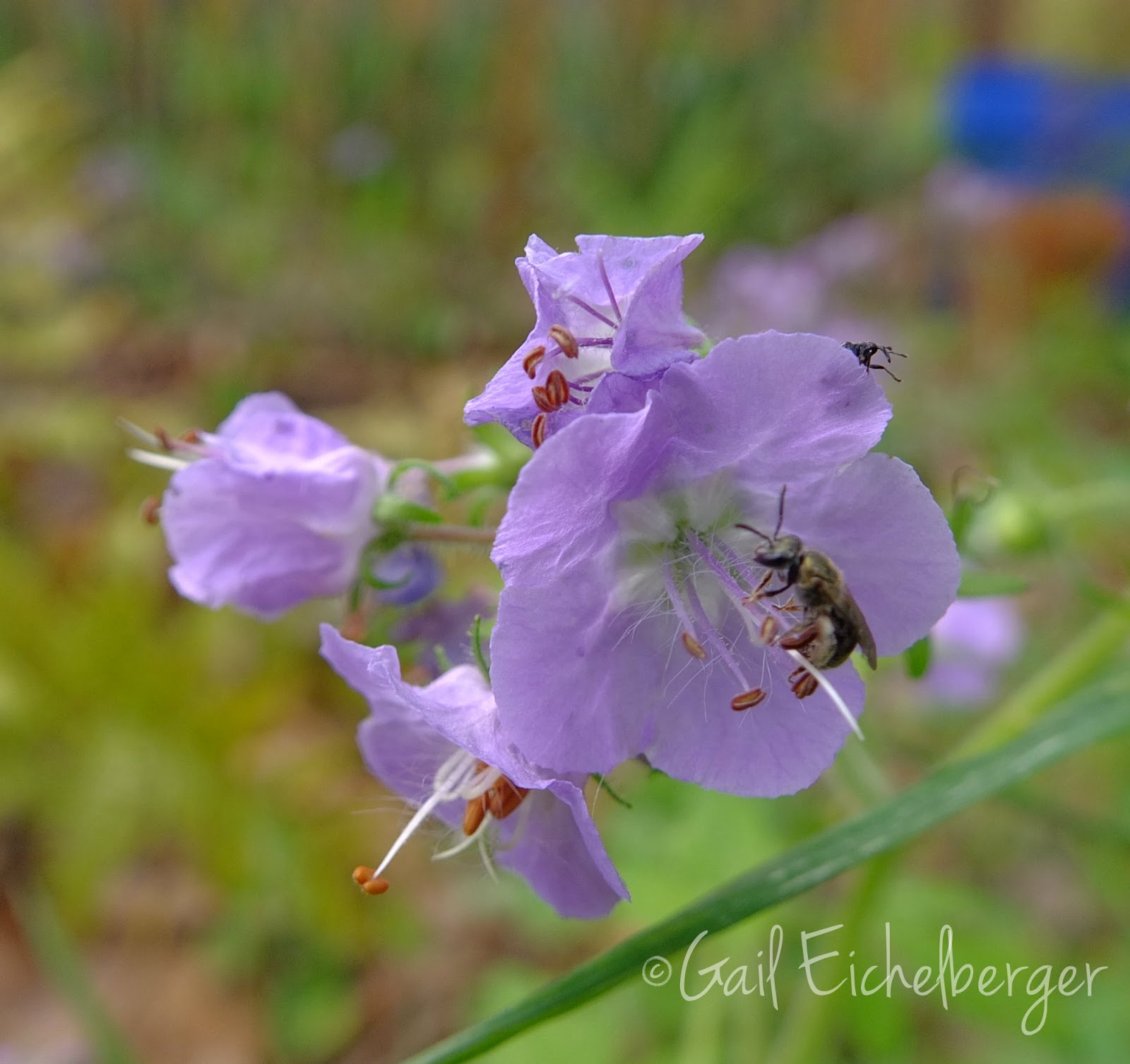
Purple phacelia/Phacelia bipinnatifida is one of my favorite spring flowers and it happens to be a biennial. I fell in love with it about 20 years ago and have worked to make sure it thrives in my garden. It's a pretty ground cover when it colonizes and it has good wildlife value (provides nectar and pollen for the earliest pollinators).
You can have a yearly blooming colony.
It's an excellent pollen and nectar source for early pollinating visitors. 

The easiest way is to find a source of first year seedlings and/or second year plants of the biennial of your choice. That's not always possible with underused natives like Phacelia bipinnatifida. Sometimes native plant nurseries sell annuals and biennials, but, most of the time you'll have to start with seeds. (Locals, you can call GroWild to see if they still have plants available otherwise, check the internet for seeds). 


If you only have one flowering plant you can still have blooms every year, it will just take a few years. It will take a little bit longer if you start with seeds.


The process:

First Spring with your biennial.  If you have a second year plant, it will bloom! Collect mature seeds (on my Phacelia it's when the ovoid capsules are ready to split), save some (Cleaned seeds should be stored dry in sealed, refrigerated containers) and direct sow others. Biennials reproduce through seeds.

If you're starting with seeds, sow them now! The seeds will germinate early the next spring, here in Middle Tennessee that often means in late February.

first leaves and true leaves

Second Spring: Seedlings will be everywhere you sowed them (cotyledons of Phacelia bipinnatifida are oval) and will rosette up (pinnately divided leaves) as the growing season continues! You can transplant them anytime, but I like to wait until fall when the rains and cool weather return.  

Now is the time to sow those seeds you saved last spring! Direct sow them into the garden and gently press the seeds into the soil. I promise you they will germinate if you've chosen the right spot in your garden. Phacelia likes moister conditions, so I plant them where I know they'll thrive.
 first year seedlings with pinnately divided leaves November 2015

Third Spring: You should now have first and second year plants and be on your way to having a wonderful yearly show! Continue to collect seeds for sowing wherever in your garden that your biennial will be happy or let them drop onto the soil where they've been growing. Continue transplanting first year rosettes during the fall.
This is what you can expect every Spring. Aren't they lovely!

They take a little bit of effort, but the results are very satisfying! 
xoxogail

Gail Eichelberger is a gardener and therapist in Middle Tennessee. She loves wildflowers and native plants and thoroughly enjoys writing about the ones she grows at Clay and Limestone. She reminds all that the words and images are the property of the author and cannot be used without written permission.

Tuesday, May 5, 2015

Hydrophyllum appendiculatum in Celebration of National Wildflower Week


Appendaged waterleaf/Great waterleaf is a biennial plant about 1–2½' tall that I wish made a bigger impact in my garden. It's found a damp space and every year there is at least one plant, of which I am most  greatful.

It's a sweet flower and has common characteristic of the Hydrophylloideae family~a taprooted plant whose flowers have 5 petals and 5 stamens. The flowers of this plant are perfect. Of course they are lovely, but, in botany terms that means that each individual flower has both male and female structures (stamens and carpels). The lovely pale purple flowers are very like a Phacelia bipinnatifida, a wonderful early bloomer that is adored by pollinators. (Bees love Purple Phacelia and so do I)

Western gardeners have many Hydrophylloideae family members to choose among. So check them out!
I wish I had gotten a photo of the many little bees that visit it for pollen and nectar. There are flowering plants every year, so it is getting pollinated. Besides the little bees, bumbles, wasps, flies, beetles, skippers and butterflies stop by!

Flowering: April -July.
Habitat: Moist rich woods, slopes, base of bluffs, woodland borders, near woodland paths, thickets.
Native: Middle Tennessee and many Eastern states in the U.S.

Now get your wildflower on and share a favorite or two for National Wildflower Week!
xoxogail

Gail Eichelberger is a gardener and therapist in Middle Tennessee. She loves wildflowers and native plants and thoroughly enjoys writing about the ones she grows at Clay and Limestone. She reminds all that the words and images are the property of the author and cannot be used without written permission.

Friday, April 18, 2014

A Few Favorite Flowers For Friday

Aquilegia canadensis
Columbine is found in rich rocky woods, north-facing slopes, cliffs, ledges, pastures, and roadside banks. Native to all states east of the Rockies, except Louisiana. A Duskywing skipper feeds on the leaves and hummingbirds seek out its nectar.
Phacelia bipinnatifida 

Purple Phacelia is common biennial wildflower in Middle Tennessee where it's found growing in moist woodlands and rocky slopes. Phacelia is all about the bees and that makes this gardener happy.
 Trillium luteum
Yellow trillium can be found in deciduous forests, open woods and along rocky stream banks in Eastern Tennessee, but, it grows happily in my Middle Tennessee garden.

 Phlox pilosa
The Practically Perfect Pink Phlox has just begun blooming~It has had a late start, which means that it might bloom into June! "Phlox flowers are the classic butterfly plant with their perfect landing pad (flared petals), a narrow tube that is accessible to the long proboscis of butterflies and fragrant flowers that occur in loose, rounded clusters.  The long bloom time means there's plenty of nectar for pollinator visitors from early to mid-spring. I've seen butterfly, skippers, bumblebees, Minor bees, carpenter bees and Flower flies visiting. I've read that Hummers visit as well and since it's blooming late here, they might stop by, too." It's happy in shade, sunshine, dry open woods, along roadsides and prairies. I am sad to report that the bunnies have discovered the PPPP and have taken a toll on the population~Not to worry, I bought new plants!
Hydrophyllum appendiculatum

Appendaged Waterleaf is a northern species of Waterleaf that is frequently found in rich woodlands in  Middle Tennessee. You'll recognize it and its near relatives by the mottled/waterstained leaves. You'll be able to tell this from the others by its maple leaf shaped leaves. Like its distant cousin Phacelia, it's a bee magnet.
Just a few of my favorite blooming wildflowers for Garden Bloggers Bloom Day! Yes, I'm late, but, you can still pop over to Carol/May Dreams Gardens blog to check out gardens from all over this great big beautiful world.

xoxogail

Gail Eichelberger is a gardener and therapist in Middle Tennessee. She loves wildflowers and native plants and thoroughly enjoys writing about the ones she grows at Clay and Limestone. She reminds all that the words and images are the property of the author and cannot be used without written permission.

Friday, April 19, 2013

Bees Love Purple Phacelia and So Do I!

When it comes to wildflowers almost all the attention centers on perennials. They're marvelous investment plants that you can count on to make a good show in your garden year after year, but, you might want to consider adding a few annuals and biennials that are native to your part of the garden world. They're charming plants and add another dimension to the garden~many of the seedlings and first year plant's foliage is quite attractive. (Gardeners, Do Yourself A Big Favor)

 One of my favorite biennials is Purple Phacelia and it's blooming right now.
It has an interesting musky odor when you brush the leaves and flowers
I can't remember when I first met Phacelia  bipinnatifida but, I remember quite clearly the first time I saw it massed on a hillside. I was going to visit a new friend's garden and was driving up her steep drive, as I turned a bend in the drive every where I looked were blooming Purple Phacelia with bees dancing from flower to flower. There's something splendid about natives that mass naturally, and this was dazzling and magical.  I knew immediately that it had to become a part of Clay and Limestone and if at all possible I wanted it to make a big presence in the garden.
One year from seed, second year to flower, then it dies. 
I don't have hillsides of phacelia, that requires much moister soil than I can give it, but, where it's naturally wet the phacelia shines. 
Let's talk about biennials for just a bit.

To have flowers every year you have to get a colony started, so you need seeds, first year plants and flowering plants. I really was lucky to be given several plants in bloom and many first year seedlings. Here's how it works! Those first flowers were visited by Bumble bees and other pollinators and got fertilized, they set seed and then died. The fallen seeds germinated and over wintered; the following spring the original first year seedlings bloomed and their flowers were fertilized, set seed, and then died.  It's not a complicated process, but it's a brilliant cycle that continues to this day.  

I make sure the cycle is not interrupted. Which means that I collect the seeds and sprinkle them where I want new plants, sometimes I move the tiny seedlings, the first year plants and I have even been known to move second year plants in late winter.  They always seem to survive!

I hope that helps! 
Purple Phacelia plays well with other early blooming native plants.
As all gardeners know, some years are better then others and this has been an especially good year for phacelia...It didn't get hot too fast and we didn't have punishing rains. As Goldilocks said, "...just right." It looks delightful right now and many native bees~like the Mason bee in the top photo, honeybees in one below and small unidentified pollinators have been visiting the plants since they opened. 
Phacelia  has pretty good wildlife value! Bees love it! They want the nectar and pollen and there is plenty of food for a variety of other visitors like skippers and small butterflies.

But, really,  Phacelia is all about the bees and that makes this gardener happy.

xoxogail

Gail Eichelberger is a gardener and therapist in Middle Tennessee. She loves wildflowers and native plants and thoroughly enjoys writing about the ones she grows at Clay and Limestone. She reminds all that the words and images are the property of the author and cannot be used without written permission.

Wednesday, February 27, 2008

When It's Too Wet To Work In The Garden, Take A Walk

One of the greenway waterfalls

This past Sunday afternoon we decided to walk in the park. Sundays are our time to talk about the past week and share plans for the coming week; so we usually head out to one of Nashville's natural areas. We decided on the Ashland City greenway.

Officially, it is named The Ashland City Bicentennial Trail. The trail in its former life was the site of the Tennessee Central Railroad tracks. There are tall bluffs on one side and a wide floodplain on the other. Beyond the floodplain is Sycamore Creek and the Sycamore Creek embayment (large cove). The trail is flat and wide, with plenty of room for bikers, walkers, joggers, parents with strollers and little kids on bikes. Completely accessible.

Either the city or a boyscout troop has done a great job of placing plant markers along the trail denoting native wildflowers, trees and even the invasives. There are carvings of the leaves on the markers to help you identify which plant in the greenery they are pointing you towards. Very clever way to educate trail users....


The bluffs are spectacular. I love river bluffs. I love thinking about water moving through and carving out the bedrock eons ago. We would walk a bit and I would stop and exclaim, "Look at that layered rock and stone, isn't it beautiful?" or "Oh, look at that columbine, isn't it amazing that plants can grow and thrive on that rock with hardly any soil?" It is amazing and beautiful.

The bluffs were also dotted with daffodils. Not quite in bloom but ready to open any day. Years ago some landowner on the top of the bluff lovingly planted bulbs in her yard (sorry guys but I think it was a woman) and now there they are growing all along the bluffs in the most unlikely places. Nature at work. I wonder how long ago they were planted and how far they traveled to find purchase on a bluff shelf.

There are even a few waterfalls. Bluffs always have waterfalls. What a nice sight and even better sound....with the water moving down the hillside. If only garden water features sounded that good.

Nothing is in bloom at this time, but soon the columbine, phacelia, spring beauties, trillium and other natives will be viewable. Columbine an evergreen, is happily growing all over the bluff ledges. It's going to be pretty this spring.


But don't limit your visit to spring, the summer may have a few surprises for you. If you're lucky you might see the American White water lily (Nymphaea odorata) in bloom. Look for it closer to the Sycamore Creek embayment.

Gail