Home of the Practically Perfect Pink Phlox and other native plants for pollinators
Showing posts with label winter interest. Show all posts

Wednesday, February 26, 2025

Wildflower Wednesday: A Winter Blooming Treasure-Hamamelis vernalis

 I am not shy about sharing photos of my blooming Ozark witch hazel. Nor do I shy away from making it a Wildflower Wednesday star every few years. It it deserves the attention. I wish more people grew this beauty instead of the non-native hybrids that most nurseries sell; especially when you consider that it's a host plant to 69 moths and butterflies. 

You'll love its sweet fragrance wafting toward you on a warm winter day (in the 50s). You'll delight in the yellow/orange crepe paper streaming petals that unfurl as the day warms and furl back up when the temperature drops. Walking by this plant in full bloom is a treat with the cool flowers, the wonderful scent and visiting pollinators.

 Hamamelis vernalis is a lovely native shrub/small tree that blooms when you have just about given up hope that winter will end and warmth will return to the world. In my Middle Tennessee garden it often begins blooming in mid January and it's not unusual for it to continue blooming all through February and often into March. 

Petals furled and unfurled

Ozark witch hazel's flowers are an unusual reddish color with four yellow/orange crepe paper streaming petals that unfurl as the day warms and furl back up when the temperature drops. This is a marvelous adaptive behavior that insures that the spidery blooms will survive the fluctuating winter weather and be in bloom for several months.  

We've had some wicked cold weather and just as expected the petal furled in the freezing temps and and unfurled with the warm temps. You've got to love that in a winter blooming plant.


They're spectacular in my mostly brown winter garden. It's planted in the native Hydrangea bed under two oak trees so that anyone using the front path to the porch can get a close up view of the flowers and smell their delicious scent. Planted at its base are Carex, Trilliums, Green and Gold groundcover and self planted Phacelia. It's a lovely spring sight.

Ozark witch hazel is more of a multi-trunked shrub than a tree which makes it perfect for planting near you patio or anywhere where you can get a close up view of the flowers and a good sniff of its fragrance. Btw, the fragrance is honey sweet. 

It's known to sucker so it would make a fine hedge. I've not experienced the suckering but, the soil at Clay and Limestone is not moist year round. I do give this plant a big gulp of water during any summer droughts.

Just before they burst open

It's no accident that most winter blooming plants have some fragrance. Nature had to insure that insect pollinators could easily find their way to a plant that blooms when most of the garden is fast asleep. On days where the temperatures are above 50˚ I've seen honeybees,  small gnats and flies visiting these beautiful fragrant flowers!

Clues that Witch hazels are insect pollinated:

  • the long, bright-yellow strap like petals are conspicuous visual cues
  • sweet smelling nectar that attracts owlet moths (known pollinator)
  • the closer an insect get the stronger the scent...Humans love that, too.
  • their stamens (pollen-bearing male bits) are right next to the nectar source
  • there's not much competition blooming mid winter so any pollinators out will find it
  • its long bloom time means the pollen remains receptive to pollinators for a long time


Yes, researchers have been curious about winter pollination. Bernd Heinrich discovered that winter moths are responsible for pollinating witch hazels. These owlet moths (Noctuidae) have a remarkable ability to heat themselves by using energy to shiver, raising their body temperatures by as much as 50 degrees in order to fly in search of food.  (source).  Also, any fungus gnats, parasitic wasps, and hoverflies that are out will visit the flowers.

Nature and its critters are amazing!

 If you want to grow this Central South/Southern native shrub just give it a partially shady location with good morning sun, moist acid soil and decent drainage. Be sure to give it some space; during its early years, it grows taller than wide, but mature specimens are usually wider than tall. It tolerates Clay and Limestone's more neutral soil, so, I am pretty sure you can have success with it, too.


 The Particulars

Hamamelis vernalis
Common Name: Ozark witch hazel


Family: Hamamelidaceae

 
Type: Deciduous shrub or small tree


Native Range: Southern and central United States in rocky stream banks, in moist open woodlands.


Zone: 4 to 8


Height: 6.00 to 10.00 feet
Spread: 8.00 to 15.00 feet


Bloom Time: January to April
Bloom Description: Yellow with red inner calyx


Sun: Full sun to part shade


Water: Medium, consistently moist. NOT drought tolerant


Maintenance: Low, does not need to be pruned but you might need to remove suckers.
 

Suggested Use: Rain Garden, along creek banks, near a walkway to catch the scent.
 

Flower: Showy, Fragrant


fruits

Fruits September–October; a hard, woody, elliptical capsule ½ inch long, splitting down a 2-parted tip/ending in 4 sharp, curved points. Capsule pops open, forcibly discharging seeds to a distance of up to 30 feet. Seeds large, hard, black, 1 or 2 per capsule. (source)


Leaf: Good Fall color-yellow gold 

Usage: Please plant them where you will be sure to appreciate them during the winter months. They can colonize and would make an effective screen along property boundary.  Use in mixed border or as a specimen.

Wildlife value: Habitat value for insects and for birds that come to nest in their branches. The seeds and flowers are eaten by turkey and ruffed grouse. Host plant to 69 moths and butterflies. Owlet moths are known winter pollinators.

Comments: An important medicinal plant for many native American tribes. Twigs, leaves and bark are the basis of witch hazel extract. In the Ozarks and elsewhere, forked switches of this plant and its close relatives have long been used by "witch wigglers" or "water witches" (water finders) to find the best places to dig wells. (source) It has great fall leaf color, attracts pollinators, and blooms for two months.

 
Tolerates: Deer, Erosion, Clay Soil 


It's happy in the garden, it gets pollinated by visiting critters and that makes me happy.


Long time readers know I have garden guidelines that I strive to follow. My goal is to plant a mixture of Central Basin natives that have good to excellent wildlife value and that provide bloom as close to year round as is possible in a middle south garden. I've planted a few perennials and shrubs that are native to adjacent states or that grow in conditions similar to my habitat. Hammaelis vernalis is found growing in Arkansas, Oklahoma, Texas and Missouri. I planted them ( I have several) for the earliest visiting pollinators, for its beautiful flowers, delightful perfume and as a memory tree for my mom. 

When asked what tree I would like as a memorial gift for my mother I told my friends that Hamamelis vernalis was the perfect tree because it bloomed in winter. My mom bloomed in the winter of her life and I thought she would love having a tree that's as unique as she was. To read a post about it go here. 

A friend made this sign that reads "for bernice xoxo"

 I love that not only does Hamamelis vernalis flower for months, it has a lovely fragrance. How clever of Mother Nature to give winter bloomers that something special to insure that moths, a little fly, gnat or bee will follow the scent and pollinate the flower.
xoxogail 


Welcome to Clay and Limestone's Wildflower Wednesday celebration. On the fourth Wednesday of each month I share information about wildflowers and other native plants. Please join in if you like. You can write a blog post or share your favorite wildflower on social media. Remember, it doesn't matter if they are in bloom or not, and, it doesn't matter if we all share the same plants. It's all about celebrating wildflowers.

Gail Eichelberger is a gardener, Tennessee Naturalist and nature writer in Middle Tennessee. She loves wildflowers and native plants and thoroughly enjoys writing about the ones she grows at Clay and Limestone. She reminds all that the words and images are the property of the author and cannot be used without written permission.

Wednesday, January 27, 2021

Wildflower Wednesday: Panicum virgatum

My Panicum virgatum is still standing tall in the garden, I hope yours is, too.
It dances all winter in the wind...

Panicum virgatum or switchgrass as it's commonly known, has a long history on this continent. It's native to the tall grass prairies of the Great Plains from the Rocky Mountains to the Atlantic Ocean (including Tennessee and other southeastern states)* Grasses like switchgrass, big bluestem, little bluestem and Indian grass dominated the tall grass prairies and were grazed by bison, deer and elk. It’s an upright, warm season bunching grass that can still be found growing in ‘remnant prairies’ and along interstates. These grasses are sometimes called "The Four Horsemen of the Prairie". (source)   


Would you forgive me if I say that Panicum virgatum is a work horse in my garden? Keep reading to find out why I love this plant and value it as a hard worker.

Despite its long historical association with most of the United States, it's rather ironic that it took European plant breeders to open our eyes to the versatility and beauty of Panicum virgatum. They've brought us lovely cultivars and spurred American breeders to get on the native grass bandwagon. It seems that each year a new cultivar is introduced to gardeners. I look at them and hope that their best wild characteristics haven't been bred out of them. I love a good looking plant that also has great wildlife value. 

One of my favorite cultivars is 'Northwind'.  I am happy to report that it's as wildlife beneficial as the straight species.

'Northwind' planted in 2009

Panicum virgatum is climatically adapted throughout the most of the United States, except California, Oregon and Washington state and in all of Canada except, British Columbia and Alberta. Wow...that means almost any of us can successfully grow them.


Switchgrass is a perennial, warm season native grass. It is drought and salt tolerant, needs no fertilizer and does well in shallow, wet soils and even droughty soils in the eastern USA. Its long roots improve soil and water quality by absorbing nutrients and sequestering carbon dioxide. The tall bunch grass benefits wildlife, offering optimal nesting and cover.

I am thrilled that it's happy in my shallow soil that's dry in the summer and wet in the winters. That's one reason it's called a work horse in my garden.

Panicum virgatum has year round beauty. Summer color is an interesting olive green that works well with Phlox, Iteas, Penstemons and other native wildflowers.


It's a warm season grass and produces growth from April to September. Look for the airy, pink-tinged flower spike blooms that rise only about a foot or two above the foliage. The inconspicuous flowers with burgundy anthers and stigmas dangle from the well-branched panicles. Teardrop-shaped seeds about 1/8 inch long develop from single-flowered spikelets. (source) The seed plumes persist well into winter, with the seeds eaten by songbirds and upland game birds. Self-sowing is usually minimal but can be prolific under ideal conditions.


It's the perfect partner for most summer blooming wildflowers. My favorites are Phlox, Echinaceas, Rudbeckias and Hypericums. It really shines in the fall when Vernonias, Solidago, and the ex-asters bloom.

But, holy-moly, what really makes this grass attractive is the long season of golden color starting in September in my garden and continuing all winter.

 fall color is especially gorgeous in the late afternoon when it's backlit by the setting sun

It's a tawny gold for several months, but, by the end of the winter it's a striking pale blonde that looks incredible in my almost total brown landscape!

Late winter is the best time to cut it back! 

I promise, you won't be sorry to let it stand all winter.


                         Floppy grasses have softened the sharp corner of my house along the path to the porch

 I am on a mission to convince my neighbors and any readers who still have their mow and blow crews buzz cut their ornamental grasses back in October to adopt late winter cut back as their preferred practice. Btw, the only plants I cut back after the first frost are Phloxes, because their stems can harbor a rather destructive phlox bug. I leave everything else standing until late winter.  

Here's why I cut my grasses back in late winter or early spring before the new growth emerges for:

  •  wildlife: they provide food and shelter. Ground-foraging birds (Sparrows, Juncos, Robins) eat the seeds that persist on the grass most of the winter and shelter in the foliage
  • winter interest with warm colors and dancing in the wind
  • ease of maintenance: it's easier to cut cut after a winter of being buffeted around
  • the little grass skippers that lay eggs and overwinter on base of switchgrass stems


Just in case I haven't made my case to convince you to switch to cutting switchgrass down in late winter, consider this: They fill the garden with movement and beauty all year long.

Not bad for a plant, especially in winter.

 xoxogail
 

 The Particulars

 Common Name: switch grass

Type: Ornamental grass

Family: Poaceae 

Native Range: North America and most of Canada

Zone: 5 to 9 

Height: 3.00 to 6.00 feet 

Spread: 2.00 to 3.00 feet 

Bloom Time: July to February 

Bloom Description: Pink-tinged 

Sun: Full sun to part shade 

Water: Medium to wet 

Maintenance: Low 

Comments: Its long roots improve soil and water quality by absorbing nutrients and sequestering carbon dioxide. 

Tolerates: Drought, Erosion, Dry Soil, Wet Soil, Black Walnut, Air Pollution.


Uses: Naturalize, rain garden, butterfly garden

Flower: Showy

Good Fall color and winter interest/color

Wildlife value: In addition to the many birds and mammals that use Switch Grass, the Tawny-edge Skipper and the Delaware Skipper also use it as a host plant.  This bunch grass benefits wildlife, offering optimal nesting and cover. Switchgrass is a particularly beneficial warm season grass for use in riparian buffer zones

 * May Prairie in Middle Tennessee


 Welcome to Clay and Limestone's Wildflower Wednesday celebration. I am so glad you stopped by. WW is about sharing and celebrating wildflowers from all over this great big, beautiful world. Join us on the fourth Wednesday of each month. Remember, it doesn't matter if they are in bloom and, it doesn't matter if we all share the same plants; it's all about celebrating wildflowers. Please leave a comment when you add your url to Mr Linky.

Gail Eichelberger is a gardener and therapist in Middle Tennessee. She loves wildflowers and native plants and thoroughly enjoys writing about the ones she grows at Clay and Limestone. She reminds all that the words and images are the property of the author and cannot be used without written permission.

Thursday, February 19, 2015

They called the winter storm Octavia

 She's blew into town and left a frozen world in her wake.
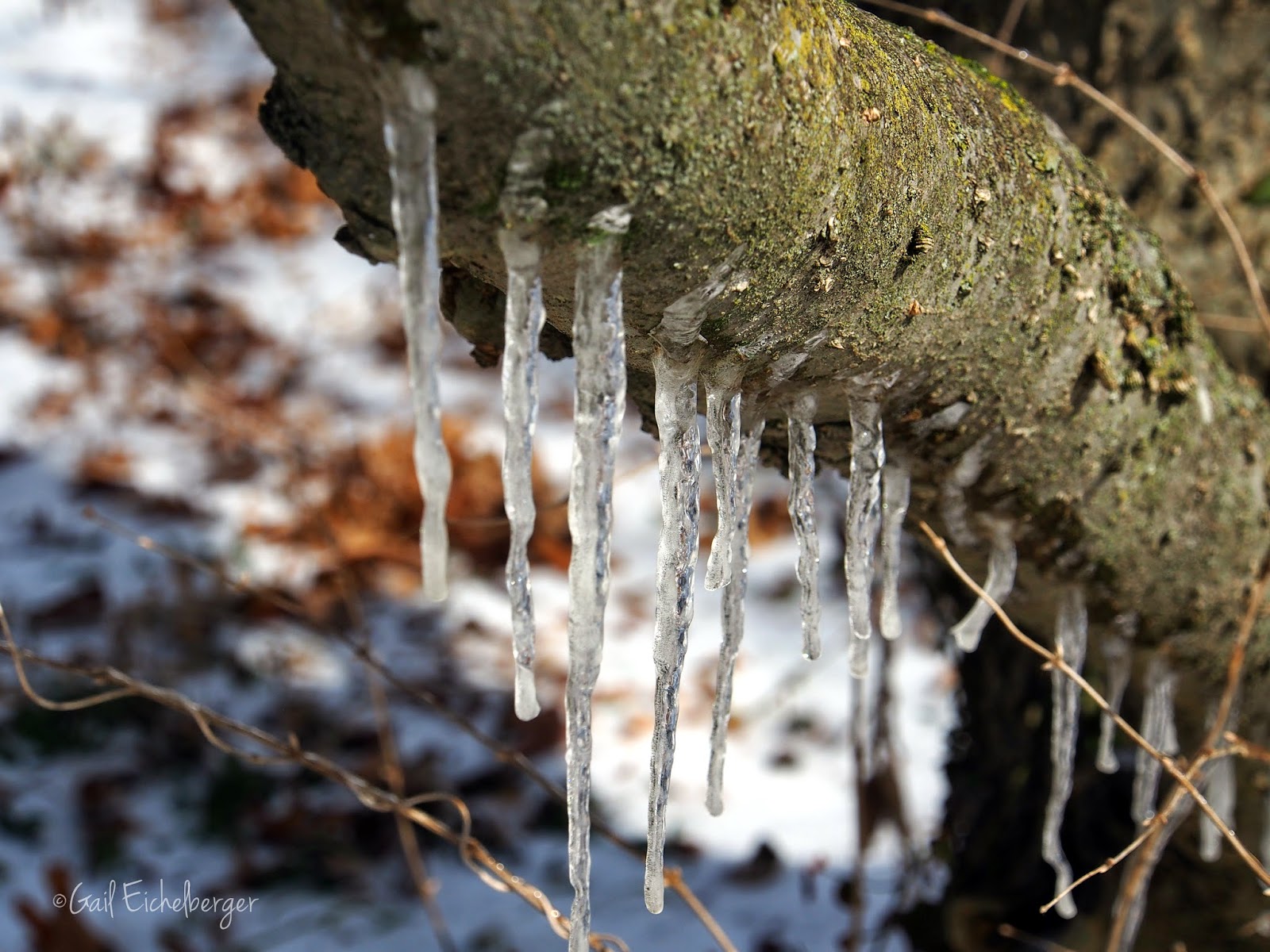
ice not snow
I hoped the snow that was forecast would arrive and protect the garden from subzero temperatures that threatened. We got ice instead. It looked like snow, but, it was ice. A dangerous ice that brought the city to a halt, closed schools and downed power lines.
It sparkled and beckoned me to explore, so I bundled up, grabbed my camera and ventured out.

Ice coated everything.

Trees, shrubs, grasses and power lines.
Itea virginica

Panicum virgatum

It was stunningly beautiful.
 I was shocked to find perfect Hamamelis vernalis/Ozark witch-hazel blooms under the ice.

They appeared to be waiting until the sun would release them from their winter prison!
At the risk of sounding melodramatic, I could relate to feeling like a prisoner trapped in winter ice!
heart warming blooms under the ice
But, what a delight to see those witch-hazel blooms on my Mom's memory tree! The promise of warmer days in those ice covered blooms was enough to melt my resentment towards this mean winter weather!  Yes, I will lose plants, but, others will endure, that's what life is like in a garden.
Soon the ice will melt and the witch-hazel flowers will unfurl their spidery petals and send their spicy sweet scent wafting through the garden.

That's enough for right now!

xoxogail

Gail Eichelberger is a gardener and therapist in Middle Tennessee. She loves wildflowers and native plants and thoroughly enjoys writing about the ones she grows at Clay and Limestone. She reminds all that the words and images are the property of the author and cannot be used without written permission.

Wednesday, January 28, 2015

Wildflower Wednesday

Hamamelis vernalis
Witch hazels are blooming right now and filling the air with their sweet vanilla fragrance whenever the sun warms up the garden. It's no accident that most winter blooming plants have some fragrance...Nature had to insure that insect pollinators could easily find their way to a plant that blooms when most of the garden is fast asleep. Those lucky enough to catch a pollinator visiting in the deep of winter describe seeing small flies and gnats...perhaps even hoverflies. Just last week when the temperature reached 60° there were honeybees nectaring on the flowers.

But, our Wildflower Wednesday star of the month, Crossvine/Bignonia capreolata is not blooming and won't be for several months. It doesn't matter, it still has much to show for itself~ the evergreen leaves take on a reddish, even a deep burgundy hue in cold weather that's quit attractive in a mostly brown winter garden.
climbing on an old twin headboard in my garden
Bignonia capreolata is a vigorous, vine that climbs by branched tendrils and has attractive trumpet shaped flowers in early spring and summer.
the cultivar 'Tangerine beauty' is a beauty!
Hummingbirds prefer trumpet shaped flowers that are rich in nectar and Crossvine flowers fits the bill! The species is a lovely red and yellow trumpet bloom. It's native to my garden and I planted the cultivar 'Tangerine Beauty'. The Crossvine blooms are very like Trumpet Creeper/Campsis radicans, both are Bignoniaceae family members and both bloom early, just in time for returning Hummingbirds, but, you'll find that Crossvine is the better behaved vine.  Plant it where you can see the blooms and the hummingbirds.

It can be trained on a trellis, a tuteur or


you can plant it to climb a wall like Cindy Tournier/My Corner of Katy has done at her house.

In my neck of the woods, it is more often seen scrambling 30 to 50 feet up the trunk of a canopy tree on its way to the top and sunshine. You might not notice it during the summer, it has deep green leaves that get lost, but, if you see a trumpet shaped flower lying on a path~stop and look up. The flowers will be blooming at the top of the tree.

Right now is a good time for you to spot the reddish leaves and vines. They're native to the Central and Southeastern US, so walkers and hikers be on the lookout and make a note where to find them early next summer!
Look up to find them
It tolerates a wide variety of growing conditions, but prefers an organically rich, well-drained soil in full sun (what doesn't). Trust me, if I can grow this beauty in my shady conditions, you can, too. If you're concerned about its vigorous growth, you can prune it in the spring after it blooms to control the size and shape.

I think Crossvine is the perfect early flowering native for anyone who gardens for wildlife....and it's good looking all winter!

xoxogail


from Briton and Brown Illustrated flora 2ns edition 1913


The Particulars:
Family: Bignoniaceae
Common Name: cross vine
Type: vigorous, woody vine that climbs by branched tendrils with adhesive disks.
Native Range: Central and Southeastern United States
Zone: 5 to 9
Height and Spread: 35.00 to 50.00 feet by 6.00 to 9.00 feet
Bloom Time: April/May to June (depending upon where you garden)
Sun: Full sun to part shade
Water: Medium
Flower: Showy, orange red tubular flowers
Ecological and landscape function: Hummingbirds, some bumblebees, evergreen with good winter color, screening
Tolerates: Heavy Shade, will climb up canopy trees and shrubs to reach the sun.

Welcome to Clay and Limestone's Wildflower Wednesday celebration. WW is about sharing and celebrating wildflowers from all over this great big, beautiful world. Join us on the fourth Wednesday of each month. Please add your url to Mr Linky and leave a comment.


Gail Eichelberger is a gardener and therapist in Middle Tennessee. She loves wildflowers and native plants and thoroughly enjoys writing about the ones she grows at Clay and Limestone. She reminds all that the words and images are the property of the author and cannot be used without written permission.

Wednesday, September 10, 2014

A Choice Later Blooming Susan

I am a here and now person and Rudbeckia fulgida var fulgida is my blooming here and now favorite!
I wish that you could see it's charms in person,  it's not just another orange coneflower!
If you've chanced upon it in a local native nursery and passed it by as just another Susan, let me disabuse you of that notion!

Trust me when I say that this Susan is choice, with smaller flowers on tall straight stems, shiny green foliage and a longer bloom than Rudbeckia 'Goldsturm'.

Plant this Susan with meadow and prairie plants like the ex-asters, Amsonia hubrichtii, and native grasses for a lovely late summer early fall display.
She's a petite flower on a tall stem.Like other rudbeckias
Like other Rudbeckias, this plant has good wildlife value, pollen for bumbles and little bees, nectar for butterflies from late summer through frost and seeds in the winter for birds. The tall stems and cones make a pretty winter picture in a snowy garden.

One more thing that may help tip the scale towards your adding this pretty to your garden~it's going strong while my R 'Goldsturm' is browning up!

xoxogail

Gail Eichelberger is a gardener and therapist in Middle Tennessee. She loves wildflowers and native plants and thoroughly enjoys writing about the ones she grows at Clay and Limestone. She reminds all that the words and images are the property of the author and cannot be used without written permission.

Wednesday, July 2, 2014

The Phlox is Blooming

....and I couldn't be happier!
It's blooming in most gardens in Nashville, but I was worried that there would be no phlox in my summer garden. This past spring I discovered that Phlox Bug had infected my plants. Long time readers know that I go to great lengths to insure that that horrid life sucking bug never gets another toe hold in my garden...But, it did.

It's my practice to let the garden go to seed and stand all winter. (A Garden Cleanup Reminder) The seed heads and stalks of native plants provide winter interest and hiding places for  the critters who live and visit my garden. But, I never, ever, ever leave the stalks of Phlox paniculata. Trashing the dead leaves and stalks is an essential first line defense against the Phlox Plant Bug. But, in a garden like mine, where rough and tumble plants do their plant thing~set seed and make offspring all over the place~it's easy to over look a few stalks.

Why trash the stalks? That's where the Phlox bugs over winter! They emerge in the spring and wreck havoc on the plants.* So, this spring when they showed up in the garden, I went on a hunt and seek mission smashing every one of the little red buggers. They're fast, but, I was faster. I also chopped the infected plants down and disposed of the stalks in the trash (never in the compost pile).
The phlox that's blooming now is looking especially good and there's more blooms to come~
I couldn't be happier~I know the pollinators will be, too.

xoxogail

**  Lopidea davisi is a plant juice/sap sucking insect that feeds mainly on perennial phlox. This is not a pest to ignore. I found out the hard way! They can form dense populations and suck the life juices (sap) out of your plants. The clever little adults lay white-colored eggs in the fall in the stems of the plant, behind the leaf petioles. The eggs overwinter  and nymphs emerge in early May. Two or more generations could develop in a season.

Top photo is P 'Laura'
Second photo is P 'Peppermint Twist'
Bottom photo is P 'David'

Gail Eichelberger is a gardener and therapist in Middle Tennessee. She loves wildflowers and native plants and thoroughly enjoys writing about the ones she grows at Clay and Limestone. She reminds all that the words and images are the property of the author and cannot be used without written permission.