Home of the Practically Perfect Pink Phlox and other native plants for pollinators
Showing posts with label mental health. Show all posts

Wednesday, December 3, 2025

First Wednesday Taking Care of Wildlife Challenge Roundup of the 2025 Posts

Dear Readers,

I believe gardeners have a key role in improving the health of our communities, especially when we practice environmentally conscious gardening. That includes protecting our irreplaceable and threatened biodiversity; supporting pollinators; replacing or reducing lawns; composting; avoiding chemical use; planting natives; supporting birds and other wildlife by dimming lights; leaving the leaves; spending time outdoors; and getting kids outdoors...That's just to name a few. 


I started the Taking Care of Wildlife Challenge meme several years ago. Taking care of wildlife in our gardens is a huge part of environmentally conscious gardening and something that I wish my neighbors would embrace. The challenge is simply to do one thing or even lots of things each month that supports nature. Then share what you've done with others on social media, the newspaper or your neighborhood listserv. Information like this when shared helps others take action.

Why now? Because things are changing drastically around us. Development is just one of the many human activities that has contributed to habitat loss, habitat fragmentation and habitat degradation. When an ecosystem has been dramatically changed by human activities it may no longer be able to provide the food, water, cover, and places to raise young that wildlife need to survive. Every day there are fewer places left that wildlife can call home. We might not be able to stop the development/destruction but, maybe we can make a lot of educational noise and help others see the value in providing for critters and ultimately helping the environment. 

I've included links and a brief summary of each 2025 Challenge. Just follow the links to each post. I hope you find them helpful. Writing them helped me learn even more about living environmentally conscious. 

If you have any suggestions for future post, please share them in the comments.

xoxogail

 The Posts:

January: First Wednesday Taking Care of Wildlife Challenge

Dear Clay and Limestone readers, I've been assessing whether to keep posting the monthly nature challenge. The overarching theme of this blog for a very long time has been about taking care of nature. It's what I do as a gardener, it's what I write about and it's what I encourage all of you to do. January 2025 will be the start of the fourth year of the taking care of nature challenges and it's still relevant in the midst of the many challenges facing wildlife today, so I've decided to keep on keeping on.


As a reader, I want your feedback and input.  I'll be asking questions in each post. I want to know if enjoyed the post? Was it helpful? What did you find most insightful about it? What questions do you still have about this topic? What topics would you like me to cover? Any other input/feedback you have will be appreciated. I hope you comment and share your thoughts, your frustrations, your successes in your garden or within your community.

I hope you know you are important to this blogger. You are after all a big reason why I continue to blog.

February: First Wednesday Wildlife Challenge: Soil is More Than Dirt

 Soil is a dynamic, living environment that supports and feeds life. Soil is the earthy material that plants grow in. It is composed of a matrix of minerals, organic matter, air and water. Each component is important for supporting plant growth, microbial communities and chemical decomposition. The soil ecosystem can be defined as an interdependent life-support system. Some scientists refer to soil as Earth's living skin.

Soil after 30+ years of leaving the leaves and top dressing with compost

 This post is intended to be an introduction to soils and is not a deep dive into a very complex topic. The purpose of this post is to give you a starting point in case you want to dive deeper. I do hope you're encouraged to learn more about the soils in your part of the world and that you get engaged in activities that promote soil health.


March: First Wednesday Taking Care of Wildlife Challenge: It's Time to Plan for Spring Migration, Birds Need a Few Things  


Spring migration is starting. The numbers are increasing quickly from thousands a night flying over to millions when it peaks later this spring. It's not too early, in fact it's time for us to think about how we can protect birds as they migrate over our cities and states.

 Migration:

Millions of birds will be returning north to their breeding grounds where abundant food and nesting sites await them. Migration is a natural phenomena that happens every fall and spring. Their journey is physically taxing and the lack of adequate food supplies along the way, bad weather, exposure to predators and the ever increasing danger from colliding into lit up buildings all add to making this journey hazardous.

 April: First Wednesday Taking Care of Wildlife Challenge: Immerse Yourself in Spring


Spring is popping out all over and this is a great time to challenge you to get outside and enjoy it all.

Our health and well-being are directly affected by the amount of time we spend in nature. In a review of the research, Gregory Bratman, PhD, an assistant professor at the University of Washington, and colleagues shared evidence that being out in nature is associated with increases in happiness, subjective well-being, positive affect, positive social interactions and a sense of meaning and purpose in life, as well as decreases in mental distress (Science Advances, Vol. 5, No. 7, 2019).

May: First Wednesday Taking Care of Wildlife Challenge: Acting Locally Thinking Globally


I don't know about you, but I am overwhelmed from all the disturbing news about the environment. Air pollution, insect decline, bird losses, deforestation, proliferation of invasive plant and animal species, habitat loss, loss of bio-diversity, water scarcity, over-fishing, ocean degradation, soil degradation, and chemical pollution. Unfortunately, the list goes on and on. It's both terrifying and exhausting and it's completely understandable that we often feel that there's nothing we personally can do to stop the avalanche of destruction.

We can't do it all, but we can do somethings. We have to pick our battles and I've chosen to garden for wildlife and fight for the critters that visit and live in my habitat. It's why I continue to blog and post on social media about native plant gardens and taking care of wildlife. I believe that positive publicity is needed to educate our friends, neighbors and communities about how important even the smallest changes we make as gardeners can be for pollinators, birds, insects and mammals, including humans, that live all around us.  

I am borrowing from the thinking globally and acting locally environmental movement. "Think globally, act locally" urges people to consider the health of the entire planet and to take action in their own communities and cities. Now that so many environmental  regulations are being erased, it is even more important that individuals come together to protect habitats and the organisms that live within them. It is incredibly important that we become active. You decide what's important to you and at on it.

 June: First Wednesday Taking Care of Wildlife Challenge: The Rodenticide Effects

I don't use pesticides in my garden and wouldn't begin to think about using a rodenticide for a mouse problem in my home. So when a friend told me she was having trouble with mice in her hobby room and that her pest control company set out rat bait I couldn't stop myself from sharing my concerns about rodenticides and what the unintended consequences of trying to kill a few mice has on wildlife outside her home.

I explained to her that rodenticides work by preventing a rodent's blood from clotting causing them to bleed internally. Although these poisons target rodents- raptors and other animals, both tame and wild that eat those rodents may be harmed or killed via secondary poisoning, known as relay toxicosis. This happens when the poisoned mice/prey animals leave one's home and wander outside where they attract the attention of hunting raptors and mammals (foxes and bobcats).

Rodenticide poisons are designed to smell and taste good to rodents to entice them to eat them, but they can be just as appealing to wild mammals, including squirrels, opossums, skunks, raccoons, and foxes if the pellets are somehow spilled outside. 

Studies have shown that rodenticide poisoning from eating poisoned rodents is more widespread than was thought. Follow this link to this study: A review: poisoning by anticoagulant rodenticides in non-target animals globally to see the serious and widespread nature of this problem. A recent study showed nearly 80% of raptors and other rodent consuming wildlife tested by WildCare were found positive for secondary rodenticide poisoning. (source)

July: First Wednesday Taking Care of Wildlife Challenge: Recomendations For Your Reading and Listening Pleasure

I am taking a July break, but didn't want to leave you without a few good listens and reads. Please feel free to add any of your recommendations in the comments on this post or in social media where this will be posted. xo


 I often listen to gardening podcasts while gardening and sometimes on walks. Here are a few I have enjoyed and I hope you will, too. Just follow the highlighted links. 


Here's a list of a few of my favorite native plant garden blogs and websites.

Sidewalk Nature: Joanna Brichetto's blog/website and her tag line says it all~ Look Around. Nature is us, our yards, sidewalks, parks, and parking lots.

Humane Gardener : Nancy Lawson's tag line is Cultivating compassion for all creatures great and small.

WildOnes:  Wild Ones promotes native landscapes through education, advocacy and collaborative action. The link will take you to the Middle Tennessee chapter

Home Grown National Park : Join the native plant homegrown garden movement. The website has links to keystone plants in your eco-region.

Nuts For Natives:  A self taught gardener (like many of us) who loves native plants.

Have a safe and wonderful July. xoxogail

 August: First Wednesday Taking Care of Wildlife Challenge: When Noise is Harmful

Yesterday, I hollered for Michael at the top of my voice and he couldn't hear me over the noise of 2 mowers and a leaf blower in the yard next door. To top that off, just as the new house construction across the street was nearing completion, I heard the sounds of a house being bulldozed. More noise on the way.

I really miss the quiet. I can go inside to get a break from the noise, but, I worry about the effects all that noise has on the critters that live and visit my garden.

Noise pollution is serious. 

Noise pollution in my neighborhood has had significant negative impacts on my well-being. I no longer spend a lot of time outside because the construction noise is so unpleasant. 

Noise is the second largest environmental cause of health problems, just after the impact of air pollution. Approximately 10 million persons in the US have permanent hearing loss from environmental noise or noise related trauma.  Scientists measure sound in decibels using scales to determine harmful sounds. Sound levels above 85 decibels are potentially harmful to a person’s ears. See the chart below to see how many sound sources in our lives are impacting our well being and our hearing.

Research (source) has shown that it can also significantly harm wildlife by interfering with their ability to communicate, navigate, find food, care for their offspring and avoid predators. This can lead to stress, reduced breeding success, and even population declines. In birds, alterations in foraging, vocalizations and nests were noted; laboratory studies, on the other hand, carried out on small mammals, highlighted spatio-temporal cognitive alterations and memory loss. Researchers concluded that greater attention to all ecosystems should be given as soon as possible so as to try to achieve a balance between human activity and the well-being of terrestrial fauna. (source)

September: First Wednesday Taking Care of Wildlife Challenge: Fall Migration is Happening and You Know What To Do


First things first, turn off your outdoor lights at night. We do this every night but it's especially important now.


We can expect millions of birds to fly over many of our cities. 

Birds migrate south as winter approaches because insects and other foods are dwindling. They're traveling to areas that have food and nesting. Some birds stay put because they can find adequate food and water, others are traveling anywhere from a hundred miles to several hundred. The birds that are being monitored by Bird Cast are long-distance migrators. "They typically move from breeding ranges in the United States and Canada to wintering grounds in Central and South America. It's an arduous journey and over 350 different species of North American birds are long distance migrators." (source)

October: First Wednesday Taking Care of Wildlife Challenge: Take Your Troubles To Your Garden


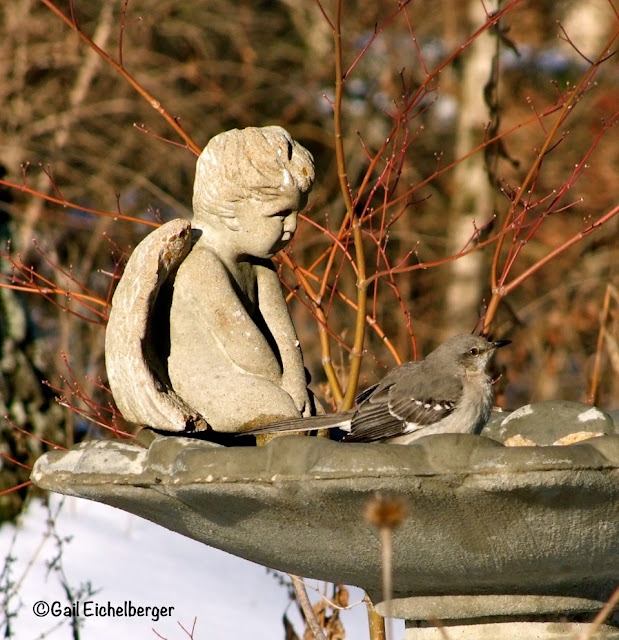
It has a great big heart and arms that envelope a troubled spirit. 

 
That's what I did this morning. I was feeling frustrated, exhausted and sad, but, sitting in my garden I noticed that my heart stopped racing, my breathing slowed down and my thoughts were filled with peace instead of worries. I decided to focus on what was happening around me.  

 November: First Wednesday Taking Care of Wildlife Challenge I Challenge You To Leave The Leaves


It's autumn in Nashville. The temperature is cooler, there's been more rain, the sky is an intense blue and the trees in my garden are a turning a delightful golden color. 

As wonderful as fall is there's also the infuriating, obnoxious and ear damaging noise of leaf blowers. Every fall my neighbors pay lawn service contractors to haul away one of our most valuable ecological resources-fallen leaves. 

We don't have to have our leaves hauled away! We can Leave the Leaves for Wildlife! I am challenging you to think differently about fall cleanup and take the challenge to leave your leaves.

Why? Because fallen leaves are one of our most valuable resources for the health of our gardens and our environment.


So very glad you stopped by.

Gailxoxo 

Gail Eichelberger is a gardener, Tennessee Naturalist and nature writer in Middle Tennessee. She loves wildflowers and native plants and thoroughly enjoys writing about the ones she grows at Clay and Limestone. She reminds all that the words and images are the property of the author and cannot be used without written permission.

Wednesday, October 1, 2025

First Wednesday Taking Care of Wildlife Challenge: Take Your Troubles To Your Garden

 It has a great big heart and arms that envelope a troubled spirit. 

 
That's what I did this morning. I was feeling frustrated, exhausted and sad, but, sitting in my garden I noticed that my heart stopped racing, my breathing slowed down and my thoughts were filled with peace instead of worries. I decided to focus on what was happening around me.  

 Robins were gobbling the ripe purple Callicarpa americana berries


Bees were all over the asters and goldenrods.

 They were climbing into the Salvia  azurea blooms and the Titmice were bathing in the birdbath. 

One gorgeous golden bumble loved the False dragonhead. 
I am so glad I took my troubles to the garden. 

This garden is where I found my voice, a point of view and learned some patience. I found my voice first as a pollinator gardener when I fell in love with bumbles and then realized they were my introduction to all of the critters that live in a garden habitat. When ever I get to a place where  I am feeling the big feels spending time just being in the garden is the best way for me get reacquainted with all of myself.

Wherever you go, go with all your heart. ~Confucius 

xoxogail 


In case you wondered-Research shows being outside has a positive impact on our health, both physically and mentally. (source)

  • Boosts immune system: You get a vitamin D infusion that helps fight viral infections. The forest air you breathe in is full of phytoncides, chemicals shed by forest plants. Phytoncides’ antifungal and antibacterial qualities stimulate your body to increase the white blood cells responsible for fighting tumor- and virus-infected cells. 
  • Enhances cognitive functions: It's a balm for our busy brains
  • Improves heart health: Lowers blood pressure
  • Promotes better sleep
  • Reduces stress: Improves mood. Just 20 minutes spent in any space that evokes nature can significantly reduce cortisol (stress hormone) levels.
  • Supports mental health: Time in nature can improve your mood and reduce the symptoms of anxiety and depression. It can alter the brain activity in your prefrontal cortex — the part regulating emotions. 

 Get more nature in your life 

  • Visit a City Parks: Take a walk, it doesn't have to be a long walk.
  • Unplug and Be Present: Leave your phone behind and focus on the sounds, sights, and smells of nature.  
  • Regular Exposure: Aim for at least 120 minutes of nature contact per week for the best results. That's about 17 minutes a day...
  • Embrace the Seasons: Take advantage of the changing seasons to spend time outdoors. It's cooling down and the leaves are starting to get their fall colors on. Get outdoors and look up at the trees.


Finally, spend time in your own garden or habitat. Be aware of what you're thinking and saying to yourself. Let go of criticisms and making a list of all the things you need to do. Don't weed, don't straighten up, just sit quietly and be. Take a look at what you've created. Celebrate the insects, birds and other critters that live in and visit your garden. You have so much to celebrate. Be at peace with yourself.

 "If we are not fully ourselves, truly in the present moment, we miss everything." Thich Nhat Hanh


 Want to Take the Taking Care of Wildlife In Our Gardens Challenge?

The first part of this challenge is to do something or even lots of things each month that supports critters living in our gardens. Gardening with native wildflowers, shrubs and trees that make sense for our ecoregion is a good place to start or continue (as the case may be). Plants and their pollinators are a classic example of mutualism: they have coevolved through evolutionary time in a reciprocal beneficial relationship. This is also true for other critters that visit and live in our gardens. 

Activities that increase our knowledge of the natural world are equally as valuable. Helping others learn about nature is included. Golly gee whiz, there are so many things you can do. 

The second part of the challenge is to post about it somewhere: Your blog, Instagram, Facebook, Twitter or even your neighborhood listserve. Wouldn't an article in the local paper be a coup for nature! Why post it? Because positive publicity is needed to educate our friends, neighbors and communities about how important even the smallest changes we make as gardeners can be for pollinators, birds, insects and mammals, including humans, that live all around us. 

Why now? My neighborhood is changing. Yours might be, too. Every day an older home along with many (if not all) of the mature oak, hickory, maple, Eastern cedar and hackberry trees are cut down. Insects, birds, even mammals lose their home site and food supplies when trees are cut down. During construction soil is compacted by bulldozers, trucks and piles of debris causing runoff; surface runoff that can carry pollution to streams and rivers. It's important that our neighbors have information about how important trees are to our ecosystem. Trees contribute to their environment by providing oxygen, improving air quality, climate amelioration, conserving water, preserving soil, and supporting wildlife.

In place of the "bee lawns" composed of Claytonia, Salvia lyrata, Ruellia humilis, fleabane, Western Daisy, Violets, self-heal, clovers, native grasses (in my neighborhood it's poverty oat grass) and sedges, they're sodded with non-native grasses. These monoculture turf lawns contribute nothing environmentally.  Here's what we lose when our diverse lawns are replaced with pristine turf grass:

  • Gone are the lightening bugs.
  • Gone are the ground dwelling/nesting native bees.
  • Gone is the habitat for insects, spiders and other critters. 
  • Gone is plant diversity. 
  • Gone are trees that provided for hundreds of moths, butterflies and other insects.
  • Gone are the nesting sites for woodpeckers, hummingbirds, Chickadees and other birds. 
  • Gone is a healthy foodweb.

 It breaks my heart. 

We can't stop the progmess, but, maybe we can make a lot of educational noise and help our new neighbors see the value in providing for critters and ultimately helping the environment.

A gardener can hope! 

xoxoGail 

Here's an incomplete list of things you might consider doing or changing in your garden, and things you can do for and/or in your community. But don't limit yourself to my list, make your own list or check out the internet for ideas.


Looking for ways to get involved go here for a list of environmental advocacy groups.

Buy the best wildflower, butterfly and bird id books for your state.

Read nature books to your children and grandchildren. Buy them nature books.

Get in the garden with your children and grandchildren.

Give nature books as baby shower gifts (Nature books for infants and toddlers)

Shrink your lawn and make your planting beds larger.

Plant your favorite native perennials and shrubs. Leave them standing after they've gone to seed to continue to provide for wildlife. What you plant in your yard makes a difference to wildlife. I garden for wildlife so every tree, shrub and plant is chosen with wildlife in mind.


Plant more natives and then consider planting even more. "A typical suburban landscape contains only 20-30% native plant species. Try reversing that trend in your own landscape by using 70-80% native species." (source

Plant for bloom from late spring to early winter. Bees are most active from February to November (longer in mild climates) late winter blooming Hamamelis vernalis and the earliest spring ephemerals (like the toothworts, hepaticas, spring beauties, and False rue-anemeone) are perfect plants for a variety of pollinators.

Commit to never, ever, ever, ever using pesticides in the garden.

Stay away from native plant hybrids and cultivars that are double flowered. They are sterile and have no pollen or nectar for insects and no seeds for the birds. If possible plant “true open-pollinated native wildflowers”

If you want to garden for wildlife and pollinators, don't let lack of space stop you! Plant your favorite wildflowers in large containers. You just might have the prairie or woodland garden you've always wanted...in a pot!
 
Create a water feature. Provide water year round that is accessible to birds, bees and other critters.

Make a rain garden in low spots to collect and mitigate runoff.

Show some soil! Our native ground nesting bees nest in bare soil, so don't mulch every square inch of your garden. 

Get rid of the plastic weed barriers in your garden, it's not good for anything.

Invite bugs into your garden. Plant annuals that attract beneficial bugs.


Learn to tolerate damaged plants. Imperfection is the new perfect.

Don't be in a rush to clean up the fall garden. Leave plant stalks and seed heads standing all winter. Leave those fallen leaves or as many as you can tolerate! Insects over winter in the fallen and decaying leaves. Leave a layer of leaves as a soft landing material under trees for moths and butterflies to over winter. Many caterpillars drop to the ground from the trees in the fall and need a soft landing site and a place to live over the winter.


Allow a fallen tree to remain in the garden. Limbs on the ground are a perfect shelter for small animals such as rabbits, chipmunks and squirrels and a habitat for beetles, termites and other insects.


Make a brush pile. Stack fallen brush, cut tree limbs, broken pots for ground beetles. Ground beetles are excellent at eating "bad bugs". Bugs are also good bird, toad and small critter food. 

Rethink what you consider a pest. Lots of good bugs eat aphids. Spiders are important predators and they're great bird food!

Add nesting boxes for birds. 

Turn off your yard up-lighting, eave lights and porch lights after 11pm. This is important for nocturnal critters including mammals, snakes, insects, bats, birds (especially during migration). (Birdcast suggestions)

Plant shrubs and small trees that provide berries and nuts.

Keep a nature journal: You can observe visitors to your water feature, make note of when they visit. Notice which flowers attract the most pollinators and which ones are just pretty faces. 

Join your state native plant society (Tennessee Native Plant Society)

Join WildOnes even if there's no local group you can join the national organization.  (Middle Tennessee WildOnes)

Support your local native plant sellers. (GroWild in middle Tennessee, Overhill Gardens in east Tennessee,  Resource Guide TN Native Plant Society)

Encourage your local garden clubs to offer native plant talks.

If your garden club has a plant sale encourage them to sell more native plants.

Get trained as a naturalist (Tennessee Naturalist Program. Almost every state has their own Master Naturalist training program

Take an online course on tree, fungi and wildflower id. 

Take an online course on designing with native plants.

Take a walk in your neighborhood and observe nature. To quote Joanna Brichetto in Sidewalk Nature "Look Around. Nature is here, is us, our driveways, our baseboards, parks, and parking lots."

Read! There are hundreds of books on gardening for wildlife, the environment, and rewilding our world. There are delightful blogs with wonderful and informative articles.

If you are already gardening with wildlife in mind then add a few signs that help educate your neighbors. (Xerces Society, Pollinator Partnership)

Join the Xerces Society.

Set up an information station where neighbors can pick up brochures about your garden and other info. 

Get certified (National Wildlife Federation, check to see what your state offers)

Support trees by joining the effort to make sure developers don't remove more trees than are necessary for their project. Work to make sure there are tree removal permits and that they are actually enforced in your community.


Visit


Gail Eichelberger is a gardener and therapist in Middle Tennessee. She loves wildflowers and native plants and thoroughly enjoys writing about the ones she grows at Clay and Limestone. She reminds all that the words and images are the property of the author and cannot be used without written permission.


Tuesday, April 1, 2025

First Wednesday Taking Care of Nature Challenge: Immerse Yourself in Spring


Spring is popping out all over and this is a great time to challenge you to get outside and enjoy it all.

Our health and well-being are directly affected by the amount of time we spend in nature. In a review of the research, Gregory Bratman, PhD, an assistant professor at the University of Washington, and colleagues shared evidence that being out in nature is associated with increases in happiness, subjective well-being, positive affect, positive social interactions and a sense of meaning and purpose in life, as well as decreases in mental distress (Science Advances, Vol. 5, No. 7, 2019).


 My mood lifts anytime I am out in nature. If I've been feeling down just sitting in the sunshine and breathing in fresh air instantly makes me feel lighter. The more time I spend outdoors the more connected I feel to myself and to the natural world.  Researchers call this feeling by a variety of names, including nature relatedness and connectedness to nature. This connectedness seems to benefit mood and mental health. Alison Pritchard, PhD, ABPP, at the University of Derby in England, and colleagues found that people who feel more connected to nature have greater eudaimonic well-being. Eudaimonic is a type of contentment that goes beyond just feeling good and includes having meaningful purpose in life (Journal of Happiness Studies, online first publication, 2019). It has been defined as a life well-lived, or human flourishing, and usually includes authenticity, excellence, growth and meaning.


Being aware of nature is one of my core values. I respect nature and have a deep belief in our interconnectedness and our responsibility for its protection.

I've been connected to nature since I was a little kid. What does it mean to be connected to nature? It means we can enjoy it, empathize with it, feel responsible for it, be aware of it, show curiosity about it, choose to be out in it and have an emotional and cognitive affinity for it.

Eric Fromm coined the term biophilia, but, it was popularized by Harvard biologist Edward O. Wilson through his 1984 book Biophilia. In it, Wilson proposed that humans' attraction to nature is genetically predetermined and the result of evolution. In other words, we are wired to be connected to nature.


Every day there's more bad news about the environment, from global warming to an insect apocalypse. Getting outside and getting connected to nature can jump start environmental consciousness. Becoming environmentally conscious starts with recognizing the impact of our individual choices on the environment. From the food we eat to the products use in our yards, our decisions have ripple effects that extend far beyond our immediate surroundings. Research indicates that when people are aware of their environmental impact, they are more likely to adopt eco-friendly behaviors (Kollmuss & Agyeman, 2002). This goes for kids, too.


My garden April 1


You probably don't need me to create a list of things you can do outside, but just in case: Here's a list!

Hiking: Nashvillians explore local trails like those at the Warner Parks, Shelby Bottoms or Beaman Park. 

Wildflower hike: Many local nature centers offer wildflower hikes with naturalists.

Biking: Take a scenic bike ride.

Picnic: Pack a lunch and enjoy a picnic in a park like Centennial Park or at a local botanical garden.  

Gardening: Plant a spring garden or tend to existing plants.  

Birdwatching: Observe the many bird species that return to the area in spring.  

Stargazing: On clear nights, enjoy the night sky and look for constellations.  

Fly a Kite: Take advantage of the wind and fly a kite in an open area like a park.  

Visit a Farmers Market: Explore local farmers markets for fresh produce and other seasonal goods.  

Outdoor Yoga/Meditation: Practice yoga or meditation in a park or garden.  

Frisbee or Disc Golf: Have fun tossing a Frisbee or playing a round of disc golf in a park or open field with friends.  

Take an Evening Stroll: Enjoy the fresh air and clear your mind with a leisurely walk.  

Go for a Run or Walk: Get some exercise and enjoy the weather with a run or walk in a park or along a trail.   

Visit a Botanical Garden: Wander through a botanical garden and admire the blooming flowers. 

Take a forest bath: Immerse yourself in nature and enjoy the calming effects of a forest bath.  

Enjoy the spring weather at an outdoor café.

Make a bird feeder. 

Take pictures of nature. 

Practice mindfulness activities.

Start a nature journal to document birds and plants.

Go on a guided foraging tour. 

Watch bumblebees at work in a garden.

Visit the zoo. 

 Last, but certainly, not least: Take your kids on a nature walk. Create childhood memories or share your own with kids as you play with sidewalk chalk, blow bubbles, or create an enchanted fairy garden.


We need to get our kids outside more...There are many good reasons to be outside for all of us, but, it's especially true for children who seem to be spending less time outdoors than ever before. When researching the numbers I was shocked to read that the average child spends only 6 -7 minutes outdoors everyday. That's so different from my free to roam childhood when as a part of a small gang of neighborhood kids we rode bikes, climbed trees, explored the woodlands and were unsupervised almost all day. Each generation has less time outdoors, let alone unsupervised time outdoors. I am not recommending that you free range kids, just give them more opportunities to be outdoors in nature. There are so many benefits for them and for nature. 

Here are six crucial ways playing outside helps children (from Harvard School of Medicine)

1.   Sunshine. Vitamin D production, improved immune system, healthy sleep and improved mood

2.  Exercise. Children should be active for an hour every day, and getting outside to play is one way to be sure that happens.

3.  Executive function. Being outside gives kids opportunities to practice problem solving, use their imagination, solve problems with playmates and help in developing other life skills.
 

4.  Taking risks. Children need to take some risks.  "Risk-taking is all about identity formation. As kids mature, they need opportunities to discover who they are, to set their own boundaries, and to establish their own values and beliefs apart from those of their parents. Wise risk-taking builds resilience, boosts confidence, encourages perseverance, and curbs fear." Climbing trees, jumping off boulders and walls, picking up bugs, and reaching out to make friends are ways kids can take a risk. Activities need to be age appropriate.

5.  Socialization. Children need to learn how to work together, to share, to cooperate, how to treat others and how to make and be a friend. 

6.  Appreciation of nature. So much of our world is changing, and not for the better. If a child grows up never walking in the woods, digging in soil, seeing animals in their habitat, climbing a mountain, playing in a stream, or staring at the endless horizon of an ocean, they may never really understand what there is to be lost. The future of our planet depends on our children; they need to learn to appreciate it, to connect to it.  Research shows that kids who grow up connected to nature are more often motivated to get involved in conservation actions. (source)

Visiting Warner Park Nature Center

Dear readers, please get outside! ...and while you're out there, would you think about ways you can help nature! xoxogail


THE FIRST WEDNESDAY CHALLENGE


Want to Take the Taking Care of Wildlife In Our Gardens Challenge?

The first part of this challenge is to do something, even lots of things, each month that support the critters living in our gardens. Gardening with native wildflowers, shrubs and trees that make sense for our ecoregion is a good place to start or continue (as the case may be). Plants and their pollinators are a classic example of mutualism: they have coevolved through evolutionary time in a reciprocal beneficial relationship. This is also true for other critters that visit and live in our gardens. 

Activities that increase our knowledge of the natural world are equally as valuable. Helping others learn about nature is included. Golly gee whiz, there are so many things you can do. 

The second part of the challenge is to post about it somewhere: Your blog, Instagram, Facebook, Twitter or even your neighborhood listserve. Wouldn't an article in the local paper be a coup for nature! Why post it? Because positive publicity is needed to educate our friends, neighbors and communities about how important even the smallest changes we make as gardeners can be for pollinators, birds, insects and mammals, including humans, that live all around us. 

Why now? My neighborhood is changing. Yours might be, too. Every day an older home along with many (if not all) of the mature oak, hickory, maple, Eastern cedar and hackberry trees are cut down. Insects, birds, even mammals lose their home site and food supplies when we lose trees. During construction soil is compacted by bulldozers, trucks and piles of debris cause runoff; surface runoff that can carry pollution to streams and rivers. It's important that our neighbors and our community have information about how important trees are to our ecosystem. Trees contribute to their environment by providing oxygen, improving air quality, climate amelioration, conserving water, preserving soil, and supporting wildlife.

In place of the "bee lawns" composed of Claytonia, Salvia lyrata, Ruellia humilis, fleabane, Western Daisy, Violets, self-heal, clovers, native grasses (in my neighborhood it's poverty oat grass) and sedges, they're being sodded with non-native grasses. These monoculture turf lawns contribute nothing environmentally. Here's what we lose when our diverse lawns are replaced with pristine turf grass:

  • Gone are the lightening bugs.
  • Gone are the ground dwelling/nesting native bees.
  • Gone is the habitat for insects, spiders and other critters. 
  • Gone is plant diversity. 
  • Gone are trees that provided for hundreds of moths, butterflies and other insects.
  • Gone are the nesting sites for woodpeckers, hummingbirds, Chickadees and other birds. 
  • Gone is a healthy foodweb.

 It breaks my heart. 

We can't stop the progmess, but, maybe we can make a lot of educational noise and help our new neighbors see the value in providing for critters and ultimately helping the environment.

A gardener can hope! 

xoxoGail


Here's an incomplete list of things you might consider doing or changing in your garden, and things you can do for and/or in your community. But don't limit yourself to my list, make your own list or check out the internet for ideas.


Looking for ways to get involved go here for a list of environmental advocacy groups.

Buy the best wildflower, butterfly and bird id books for your state.

Read nature books to your children and grandchildren. Buy them nature books.

Get in the garden with your children and grandchildren.

Give nature books as baby shower gifts (Nature books for infants and toddlers)

Shrink your lawn and make your planting beds larger.

Plant your favorite native perennials and shrubs. Leave them standing after they've gone to seed to continue to provide for wildlife. What you plant in your yard makes a difference to wildlife. I garden for wildlife so every tree, shrub and plant is chosen with wildlife in mind.


Plant more natives and then consider planting even more. "A typical suburban landscape contains only 20-30% native plant species. Try reversing that trend in your own landscape by using 70-80% native species." (source

Plant for bloom from late spring to early winter. Bees are most active from February to November (longer in mild climates) late winter blooming Hamamelis vernalis and the earliest spring ephemerals (like the toothworts, hepaticas, spring beauties, and False rue-anemeone) are perfect plants for a variety of pollinators.

Commit to never, ever, ever, ever using pesticides in the garden.

Stay away from native plant hybrids and cultivars that are double flowered. They are sterile and have no pollen or nectar for insects and no seeds for the birds. If possible plant “true open-pollinated native wildflowers”

If you want to garden for wildlife and pollinators, don't let lack of space stop you! Plant your favorite wildflowers in large containers. You just might have the prairie or woodland garden you've always wanted...in a pot!
 
Create a water feature. Provide water year round that is accessible to birds, bees and other critters.

Make a rain garden in low spots to collect and mitigate runoff.

Show some soil! Our native ground nesting bees nest in bare soil, so don't mulch every square inch of your garden. 

Get rid of the plastic weed barriers in your garden, it's not good for anything.

Invite bugs into your garden. Plant annuals that attract beneficial bugs.


Learn to tolerate damaged plants. Imperfection is the new perfect.

Don't be in a rush to clean up the fall garden. Leave plant stalks and seed heads standing all winter. Leave those fallen leaves or as many as you can tolerate! Insects over winter in the fallen and decaying leaves. Leave a layer of leaves as a soft landing material under trees for moths and butterflies to over winter. Many caterpillars drop to the ground from the trees in the fall and need a soft landing site and a place to live over the winter.

Allow a fallen tree to remain in the garden. Limbs on the ground are a perfect shelter for small animals such as rabbits, chipmunks and squirrels and a habitat for beetles, termites and other insects.


Make a brush pile. Stack fallen brush, cut tree limbs, broken pots for ground beetles. Ground beetles are excellent at eating "bad bugs". Bugs are also good bird, toad and small critter food. 

Rethink what you consider a pest. Lots of good bugs eat aphids. Spiders are important predators and they're great bird food!

Add nesting boxes for birds. 

Turn off your yard up-lighting, eave lights and porch lights after 11pm. This is important for nocturnal critters including mammals, snakes, insects, bats, birds (especially during migration). (Birdcast suggestions)

Plant shrubs and small trees that provide berries and nuts.

Keep a nature journal: You can observe visitors to your water feature, make note of when they visit. Notice which flowers attract the most pollinators and which ones are just pretty faces. 

Join your state native plant society (Tennessee Native Plant Society)

Join WildOnes even if there's no local group you can join the national organization.  (Middle Tennessee WildOnes)

Support your local native plant sellers. (GroWild in middle Tennessee, Overhill Gardens in east Tennessee,  Resource Guide TN Native Plant Society)

Encourage your local garden clubs to offer native plant talks.

If your garden club has a plant sale encourage them to sell more native plants.

Get trained as a naturalist (Tennessee Naturalist Program. Almost every state has their own Master Naturalist training program

Take an online course on tree, fungi and wildflower id. 

Take an online course on designing with native plants.

Take a walk in your neighborhood and observe nature. To quote Joanna Brichetto in Sidewalk Nature "Look Around. Nature is here, is us, our driveways, our baseboards, parks, and parking lots."

Read! There are hundreds of books on gardening for wildlife, the environment, and rewilding our world. There are delightful blogs with wonderful and informative articles.

If you are already gardening with wildlife in mind then add a few signs that help educate your neighbors. (Xerces Society, Pollinator Partnership)

Join the Xerces Society.

Set up an information station where neighbors can pick up brochures about your garden and other info. 

Get certified (National Wildlife Federation, check to see what your state offers)

Support trees by joining the effort to make sure developers don't remove more trees than are necessary for their project. Work to make sure there are tree removal permits and that they are actually enforced in your community.


Gail Eichelberger is a gardener, Tennessee Naturalist and nature writer in Middle Tennessee. She loves wildflowers and native plants and thoroughly enjoys writing about the ones she grows at Clay and Limestone. She reminds all that the words and images are the property of the author and cannot be used without written permission.