It's
National Pollinator Week and Wildflower Wednesday. Could there be a better time than now to showcase my favorite wildflower pollinator magnets while discussing pollinator gardening?
 |
| Coreopsis attracts small and large bees |
As a wildflower loving, native plant fan who gardens for wildlife, the plants in my garden need to be more than just pretty faces, they must be helpful for the critters that visit and live here. The Wildflower Wednesday stars of the month fit that description to a T~they have pretty faces and great wildlife value.
 |
| "Cedar Lane' Lonicera sempervivens is a hummingbird magnet |
I am often asked to help friends plan their garden. The first thing I do when anyone asks me what they should plant in their garden is to share my gardening philosophy, then I say this: "It's your garden, you can plant what ever you want, but, please remember to plan for all the critters that live and visit your garden."
 |
| Asclepias tuberosa is a magnet for bees and butterflies |
I tell them that they will never be sorry! Pollinators will thank them by hanging around pollinating flowers and vegetables/fruits; beneficial insects will raise offspring that will gobble up harmful insects; and songbirds and spiders will keep the insects in check. The more you plan and plant for critters...crawling, flying and even digging ones, the healthier and more diverse your garden will be.
 |
| Eastern Bluebirds eat insects |
I tell them that it's important that anything they put as much work and effort into as they put into a garden should bring joy and that gardening for critters adds to that joy.
 |
| Hypericum frondosum attracts small and large bee. |
We've been convinced by advertising that a garden should be perfect and that insects are harmful and must be eliminated or they will damage our flowering plants and make them ugly. I encourage anyone who asks for my help to reconsider beauty and to begin to appreciate the insect damaged plant as providing food for a critter that may in turn be food for a spider, another insect or a song bird. See bluebird photo above.
 |
| Assassin bug waiting on a coreopsis |
I encourage these gardeners to look at their plants very closely to find insects that might be living on them. A friend told me she use to pull the caterpillars off her fennel before she knew they were Swallowtail butterfly cats. New gardeners need to make sure ugly bugs aren't
beneficial insects before you pluck them off or squish them. Some of the "good bugs" include lacewings, lady beetles, minute pirate bug, soldier bugs, assassin bugs, braconid wasps, tachinid flies, flower flies and aphid mites.
 |
Insect nibbled petals of Echinacea purpurea don't deter pollinators
|
I ask them to consider the bigger picture, that their garden might be an oasis of food and shelter in a sea of over fertilized and pesticide treated lawns.
 |
| Liatris spicata attracts small and large bees and butterflies |
I garden in a sea of lawns and know how important a wildlife friendly garden is to pollinators and other critters.
 |
| Monarda fistulosa is a magnet for bees, hummingbird moths and hummers |
My personal goal is to make a lovely garden that provides nectar and pollen for bees and butterflies from late winter until late fall. Clay and Limestone is a garden for all critters to find food and shelter and to raise their offspring. It's also a stopping off place for water and food (seeds and berries) to migrating birds. When I say all critters, that includes pesky rodents and mammals.
 |
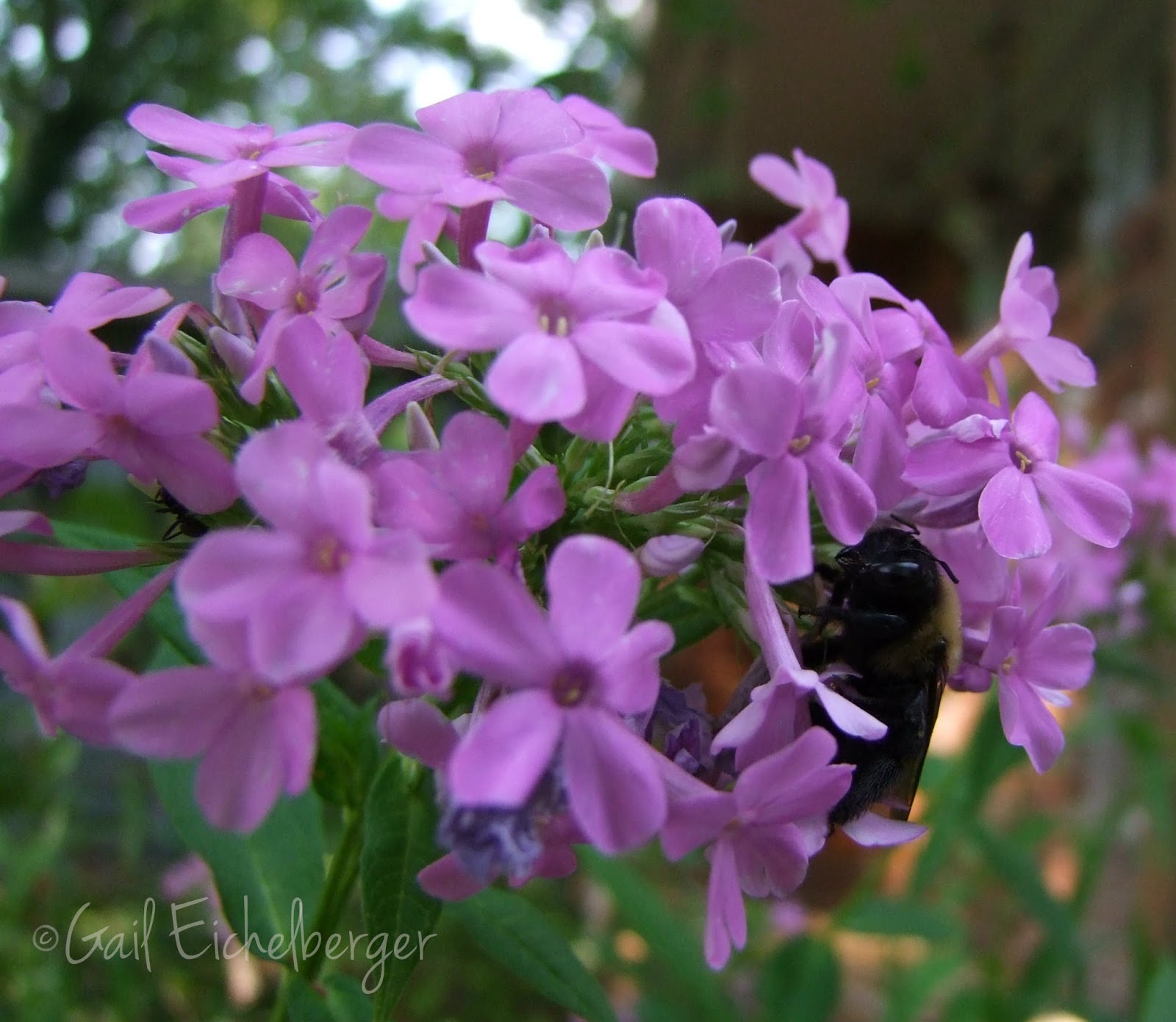
| Phlox paniculata and nectar robbing Carpenter Bee |
If you're a new gardener and want to create a pollinator friendly garden or want to add more pollinator friendly plants to your garden, I urge you to take time to figure out what plants make sense for your garden conditions. Invest in a good wildflower identification guide for your part of the country, join a native plant society and visit your local botanical garden and arboretum. If you are lucky enough to have garden centers that sell native plants shop there and not big box stores.
 |
| Echinacea tennesseensis is endemic to Central Basin cedar glades |
It took me years to figure out that gardening would be a lot more fun and successful if I gardened with Middle Tennnessee/
Central Basin natives, after all they evolved with our wet winters and dry summers. Now they are my go to plants.
 |
| 'Solar Eclipse' and 'Cherry Brandy' are two Rudbeckia hirta cultivars that attract pollinators to an early summer garden |
Native annuals/short lived perennials like
Rudbeckia hirta cultivars are wonderful additions to a pollinator garden. Lavender, sweet alyssum and herbs are also good additions to a pollinator friendly garden.
Beneficial insects love many of them and we want beneficials in our gardens.
 |
| Hydrangea arborescens is a pollinator friendly native shrub |
When you're creating your beautiful pollinator garden, be sure to include trees and shrubs, you might be surprised to learn that many of the woodies are far more important to insects than flowering plants.
 |
| Elymus hystrix is a host for the caterpillars of the Northern Pearly Eye butterfly and several moths |
When you think about ornamental grasses, and I know you will, please consider planting one of our fine native grasses. Grasses like
early blooming Bottle Brush grass fill the garden with movement and beauty all year long, while providing food and shelter for visiting mammals, birds and insects.
 |
| Stokesia laevis is a major butterfly, Bumblebee, hoverfly and beetle attractor |
Fill your garden with native plants that are pollinator magnets! You'll never be sorry.
 |
| Pycnanthemum muticum attracts bees, wasps, flies, small butterflies, and beetles |
Here's the nitty gritty for creating a pollinator friendly garden.
- plant a lot of nectar and pollen producing plants, lots and lots; swathes work, so does repetition (Central Basin natives make sense in a Middle Tennessee garden)
- don't forget trees, shrubs and grasses in your garden plan
- plant host plants~so the offspring of butterfly, beetles and other pollinators can feed
- plan for bloom from late spring to early winter
- include water for bees
- provide nesting sites near your garden for a variety of visitors: Build a pollinator condo, leave some bare ground for earth nesting bees and pile decaying logs for beetles who like to tunnel.
- practice peaceful coexistence. Bees sometimes choose to nest in inconvenient places. Rather than exterminating them, think of it as an opportunity to watch and learn about them up close.
- take the pledge to never, ever, ever use pesticides in your garden. I really do mean never!
 |
| Phlox 'Wanda' |
If this post helps you have as much fun as I have gardening for pollinators and other wildlife then I will consider myself successful.
Happy Wildflower Wednesday.
xoxogail
Welcome to Clay and Limestone's Wildflower Wednesday celebration. I am so glad you stopped by. WW is about sharing and celebrating wildflowers from all over this great big, beautiful world. Join us on the fourth Wednesday of each month. Remember, it doesn't matter if they are in bloom or not; and, it doesn't matter if we all share the same plants. It's all about celebrating wildflowers. Please leave a comment when you add your url to Mr Linky.
Gail Eichelberger is a gardener and therapist in Middle Tennessee. She loves wildflowers and native plants and thoroughly enjoys writing about the ones she grows at
Clay and Limestone. She reminds all that the words and images are the property of the author and cannot be used without written permission.