Home of the Practically Perfect Pink Phlox and other native plants for pollinators
Showing posts with label pollinator gardening. Show all posts

Wednesday, December 27, 2023

2023 Wildflower Wednesday Roundup


Hypericum frondosum's color is still happening in the garden

I love gardening in the Middle South, but, this has been an especially challenging year. Droughts are a regular occurrence in Tennessee’s climate, but, the one we experienced throughout the late summer and fall has been devastating. I fear for shrubs and trees and wonder if I will see the real loss when spring rolls around in 2024. Climatologists have said, "Expect extreme weather patterns." and we've had them. Fortunately we haven't had an extreme Arctic freeze like December 2022. None the less, we are fortunate to have four seasons in the middle south; a mercifully short winter and a delightful spring and autumn which make up for the steamy hot and often too dry summer weather. The days are starting to lengthen and before long the earliest spring ephemerals will break dormancy and the gloriously long bloom of wildflowers will begin. 

Here's the Wildflower Wednesday Roundup.  Please follow the links to read about our glorious wildflower stars. xoxogail 


 January 2023: Hamamelis vernalis and A Wildflower Wednesday Challenge


I've decided to continue the WW Challenge into 2023 and beyond. It's a call for doing at least one thing a month to support nature/garden critters/etc. I will include an idea list each month. Long time readers know that I've been an advocate of gardening with native plants and the critters that visit and live in our gardens since my early blogging days. Back then I fell in love with the bumbles that were visiting my garden and wrote many posts about pollinators of all kinds. I also loved sharing posts about the native wildflowers that supported those critters and began Wildflower Wednesday. It's been at least a dozen years since  that first Wildflower Wednesday meme post. I invited others to share their wildflower star of the month and many did. I continue to use the Wildflower Wednesday posts to call attention to our native plants that have co-evolved with critters in a mutually dependent manner. Co-adaptation is easiest to see with insects/pollinators and flowering plants in our gardens. Researchers have found at least three traits that flowering plants have evolved to attract pollinators: (source)

  • Distinct visual cues: flowering plants have evolved bright colors, stripes, patterns, size  and colors specific to the pollinator. For example, flowering plants seeking to attract insect pollinators are typically blue an ultraviolet, whereas red and orange are designed to attract birds.     
  • Scent: flowering plants use scents as a means of instructing insects as to their location. Since scents become stronger closer to the plant, the insect is able to hone-in and land on that plant to extract its nectar.     
  • Some flowers use chemical and tactile means to mimic female insect species to attract the male species.


Let's consider our January star with co-evolution in mind.

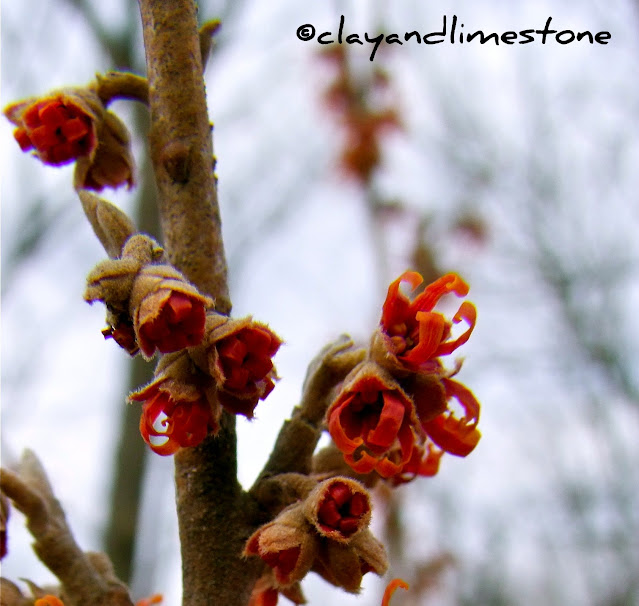
Hamamelis vernalis is a lovely native shrub/small tree that blooms when you have just about given up hope that winter will end and warmth will return to the world. In my Middle Tennessee garden it began blooming the first week in January. It's not unusual for it to continue blooming into February and sometimes March. 

Ozark witch hazel's flowers are an unusual reddish color with four yellow/orange crepe paper streaming petals that unfurl as the day warms and furl back up when the temperature drops. This is a marvelous adaptive behavior that insures that the spidery blooms will survive the fluctuating winter weather and be in bloom for almost two months. This is super important in ensuring that any pollinating critters that are out and about on warmer days will find their way to the lovely flowers.

 February 2023: Dirca palustris, An Underused/Underappreciated Woodland Beauty


Honestly, I was worried that there would be no flowers on Dirca palustris this year after the December flash freeze. Also, worrisome was a friend's loss of his decade old Leatherwood to a fungus. Long time readers know that I rushed outside to make sure the shrub was okay. Geez Louis, was I relieved that it was doing fine.

In case that has you wondering about the shrub's hardiness, it's a very cold-hardy plant, being able to tolerate temperatures down to around -22°f when fully dormant. The flowers are produced in early spring, however, and are very likely to be damaged when the plant is grown in regions with late frosts. (source)

Despite my worry, it bloomed right on schedule.

 March 2023: A Few Spring Epemerals from Clay and Limestone 

Neither rain nor cold, or even more rain and  then very cold weather could stop the delightful harbingers of springtime that are blooming at Clay and Limestone. The delicate white or pinkish flowers of ephemerals bloom early in spring, set seed, then disappear until the next spring.

 If you had to choose one of the earliest spring ephemerals as a favorite...Would you? Could you?

Claytonia virginica or Spring Beauty

 Would you choose the candy striped Spring Beauty? 

 Claytonia virginica's flowers are about the size of a dime with five petals that spread wide as the sun warms them. From a distance, the flowers appear white, but, each petal is suffused with a delicate network of pastel pink veins. Those pink veins are nectar guides. Spring Beauties are pollinated by over 100 species of insects. That's a lot of bees, flies and other winged creatures relying on nectar and pollen. That makes them an important early food source and extremely important in our garden habitats and near by woodlands. 

Perhaps, you would choose the perfumed flowers of Cardamine concatenata/Cut-leaved toothwort! This is a common plant in Middle Tennessee, but that would never detract from its charm. Like many early blooming spring wildflowers this one is low to the ground (and you can count on getting dirty knees trying to take a decent photo). While you're crawling around you might notice their sweet fragrance. It's especially noticeable on sunny warm days.

Cut-leaved toothwort


April 2023:  Monarda bradburiana 


When a plant description reads like this: "Monarda bradburiana is an upright bushy perennial with square green stems" it's hard to get excited! But when you see the plant in flower and read about its wonderful qualities you know you want it in your garden. At least that's what happened to me. 

Monarda bradburiana is an exceptional Monarda and worthy to be in your garden.

  • it's a compact clumping perennial wildflower
  • plants have gray-green aromatic leaves on strong square stems 
  • it blooms in mid spring in my middle Tennessee garden
  • the stems are topped by showy rounded clusters of pale pink tubular flowers speckled with purple
  • pollinators flock to the blooms
  • it will thrive in sunny or partly shaded gardens with average well drained soils.
  • no mildew
  • it may self seed...that's a plus for me
  • not as aggressive as other Monardas

 It's lovely and the fact that so many pollinators are attracted to it is a major plus. 

Besides all that...who could resist a plant with purple freckles!


 May 2023: There Be Dragons In the Garden

 The Dragons in my garden are the best kind to have. They're dramatic and elegant looking, growing over three foot tall with a two foot "wingspan". 


They mingle well with the denizens of Clay and Limestone, preferring the dappled sunlight and a moist, rich woodland soil that I have worked to create. 
 
Green Dragon, aka, Arisaema dracontium is marvelous to behold. The woodland wildflower emerges as one stalk and slowly unfurls its mighty wings. Or, if you prefer leaf! What looks like two leaves is one leaf that forks into leaflets of unequal size and uneven numbers. Go ahead and count them...it's always uneven.


June 2023: Clustered Mountain Mint

 Pycnanthemum muticum is quite possibly a perfect pollinator plant.


But you don't have to take my word for this! Just google Mountain Mint and every nursery selling it, State Native Plant Society or blogger who writes about it extols its insect attracting virtues. Trust me and others, this is the best mountain mint species for attracting and supporting pollinating insects! 

Here's more! The researchers at Penn State's The Pollinator Trial found that Clustered Mountain Mint was the best plant for flowering longevity; for pollinator visitor diversity; for sheer number of insect visitors (78); and, for sheer number of bee and syrphid visitors. Wowzer!


July 2023:  Elephantopus carolinianus 


 I don't think you would be at all surprised to discover that I've found another wildflower to love! This one is called Elephant's foot. It's a very cool flowering plant with large leaves and tiny flowers. When I say tiny I mean tiny and easily missed unless you're crawling around on the ground in a woodland setting. Yes, I do spend time crawling around on the ground looking at plants and I totally recommend it. 

Although, I've seen Elephant's foot in wooded areas near by none have naturally occurred at Clay and Limestone. But, thanks to my South Carolina gardening friend Janet, I have some in the garden. I planted them in the spring ephemeral bed along the driveway. They've survived and flowered, but not spread aggressively as some gardeners have reported. Maybe, I should be careful about what I wish for, but, I do wish this one would spread about; it would make an attractive ground cover and massing them would highlight the pretty flowers so much better.

On that note, I've discovered three seedlings in the cracks in my asphalt drive; which both amuses and amazes me. Whenever I find any plants growing in sidewalk cracks or grooves I conclude that they're perfect plants for Clay and Limestone! Plants that are able to adapt to harsh environmental conditions like heat, lack of nutrients and not much moisture, truly are treasures. It's looking good that Elephant's foot can survive our summer droughts and shallow soil. It also looks like I will be collecting seeds this fall since propagation appears to be easy! (see The Particulars below)


August 2023: Vernonia gigantea, A Rough and Tumble Wildflower


Vernonia gigantea is one of my favorite of the late summer rough and tumble wildflowers that make a home in the garden. They make gardening at this time of year a pleasure. Bees, butterflies, skippers, and various bee flies seek out the nectar and pollen. Deer do not browse it.

Ironweed is the common name for this beauty. It's a clump forming perennial with clusters of fluffy magenta-purple petaled flowers in the Asteraceae family. The flower heads consist of  9 to 30 disc flowers that sit atop stiff, upright stems with lance shaped leaves.  It's another native that doesn't mind wet feet and grows at Clay and Limestone despite the dry clay soil each summer. I do make sure it gets a good drink of water during especially droughty times.


September 2023:  Rough and Tumble Wildflowers on the Greenway and in My Neighborhood

It's rough and tumble wildflower bloom time in my garden and at the greenway where I walk most mornings. I am delighted to see so many different wildflowers in the sea of invasive honeysuckle, Mimosa, Ailanthus, Euonymous fortunae, Bradford Pears, privet and Rose of Sharon that have almost completely taken over many of our greenways. I love that these rough and tumble wildflowers have survived the invasion and are there for wildlife. 

Several former Wildflower Wednesday stars have a presence on the greenway and you can click on the highlighted plant names to see that post. I will introduce you to several new plants.


Hairy leaf cup/Bear's Foot/Smallanthus uvedalius


October 2023: Ex-aster Time is the best time to be in the garden

I've said it before and I'll say it again, ex-aster time is the best time to be in the garden. The days are warm and Autumn angle of the sun makes everything glow.

Symphyotrichum, aka ex-asters, and other Central Basin natives grew with happy abandon in the forested woodland where this garden now stands. Seventy years ago our house was built in a neighborhood carved from the woodland. Homeowners came and went while the asters and wildflowers grew quietly on the woodland edges. Almost 40 years ago this month my husband and I bought our 1955 ranch. There was a canopy of oaks, Hickories and Ashes and a old Cersis canadensis that was declining. Along the asphalt driveway was a Ostrya virginica that was being strangled  by a white Wisteria vine. At the edges of the yard were some ephemerals and other native plants that this new gardener only discovered later. What I did notice was a cloud of blue flowers that were dancing in the breeze. The plants were alive with activity; there were tiny bees, glowing metallic copper and green; flies that looked like bees; wasps of all sizes and many different bumbles. I fell in love with those beautiful blue flowers that I learned were asters and, of course, the humming that turned out to be native bumbles and other little bees.

November 2023 So Thankful for Willowleaf Asters

I love everything about Willowleaf aster.

When I say everything, I mean everything.
  • I love that it can survive frosts. 
  • I love that it's still providing food for every bee, butterfly, moth, wasp and critter that's still up and about on cooler days. 
  • I love that it has survived droughts in my garden even though it's so much happier in moist soil. 
  • I love that it's a traveler and moves around the garden via robust rhizomes to form large clonal colonies. 
  • Seriously, I don't mind that it makes a big presence, because it's easy to transplant and transplants well.
  • I love that Willowleaf aster is THE gathering place for all the bumbles at the end of a hard day! Bumbles are the last to leave my garden at night and it's not unusual to find them slumbering on the flowers on a cool Autumn morning. I always thank them and wish them a good day, they are quite the hardest workers in my garden.


Thanks for stopping by to see our Wildflower Wednesday stars for 2023. They're all favorites and all incredible plants to add to most of your gardens. If you garden in middle Tennessee they are perfect for your garden. 

I love when you visit and leave comments, especially when you share something about your garden. I hope to see you in 2024 and may your garden give you the joy that mine has given me. xoxogail

Welcome to Clay and Limestone's Wildflower Wednesday celebration. On the fourth Wednesday of each month I share information about wildflowers and other native plants. Please join in if you like. You can write a blog post or share your favorite wildflower on social media. Remember, it doesn't matter if they are in bloom or not, and, it doesn't matter if we all share the same plants. It's all about celebrating wildflowers.

Gail Eichelberger is a gardener and therapist in Middle Tennessee. She loves wildflowers and native plants and thoroughly enjoys writing about the ones she grows at Clay and Limestone. She reminds all that the words and images are the property of the author and cannot be used without written permission.


Wednesday, April 26, 2023

Wildflower Wednesday: Monarda bradburiana


When a plant description reads like this: "Monarda bradburiana is an upright bushy perennial with square green stems" it's hard to get excited! But when you see the plant in flower and read about its wonderful qualities you know you want it in your garden. At least that's what happened to me. 

Monarda bradburiana is an exceptional Monarda and worthy to be in your garden.

  • it's a compact clumping perennial wildflower
  • plants have gray-green aromatic leaves on strong square stems 
  • it blooms in mid spring in my middle Tennessee garden
  • the stems are topped by showy rounded clusters of pale pink tubular flowers speckled with purple
  • pollinators flock to the blooms
  • it will thrive in sunny or partly shaded gardens with average well drained soils.
  • no mildew
  • it may self seed...that's a plus for me
  • not as aggressive as other Monardas

 It's lovely and the fact that so many pollinators are attracted to it is a major plus. 

Besides all that...who could resist a plant with purple freckles!

My garden this week


The first time I saw Monarda bradburiana was at the Lurie Garden in Chicago. Piet Oudolf, a renowned garden designer has used it there to perfection. I was there in the spring and it looked fabulous among the rivers of Salvia, native grasses, and Amsonias. The entire planting is sublime.


Indeed, Monarda bradburiana is an upright bushy perennial with square green stems. "It's a member of the Lamiaceae/mint family and shares other characteristics that make this plant family easily identifiable. Square stems, fragrant opposite leaves, flowers that are usually arranged in clusters and feature two- lipped, open-mouthed, tubular corollas (united petals) with five-lobed bell-like calyxes (united sepals).  Lamiaceae is distributed nearly worldwide, and many species are cultivated for their fragrant leaves and attractive flowers. The family is particularly important to humans for herb plants useful for flavor, fragrance, or medicinal properties." (Source)  


I plant it for its attractiveness to pollinators and its beauty.

Wondering if you want to add another Monarda to your garden and concerned that it will be a magnet for powdery mildew? Perhaps this from the MT Cuba Research Center will help with your decision making. Mt Cuba is known for its trials of garden plants and they trialed Monardas for two years (2014-2016). This is what they had to say about our Wildflower Wednesday star.

 "Monarda bradburiana is a very promising species for several reasons. It has a naturally short habit (about 2’ tall) and incredibly disease resistant foliage. Its subdued, pale pink flowers are also unique among bee balms which tend to have very bright, bold colors. The bloom period is also about a week earlier than most other Monarda. The only complaint with Monarda bradburiana is that it has a very floppy habit. If further research of this species focuses on sturdier habits it would easily be one of the best bee balms for garden use." (source) 

 Let's hope that further research doesn't take the best of this delightful plant away while trying to improve it's floppiness! 


 THE PARTICULARS

Botanical name: Monarda bradburiana
Common Name: eastern beebalm 
Type: Herbaceous perennial
Family: Lamiaceae
Native Range: Monarda bradburiana occurs in the central and southern United States from Indiana to Alabama and west to Kansas, Arkansas and Texas.  The greatest distribution is in Illinois, Missouri and Arkansas. It's native to middle Tennessee.


Zone: 5 to 8
Height: 1.00 to 2.00 feet
Spread: 1.00 to 2.00 feet
Bloom Time: April/May
Bloom Description: Pink to white with purple and spotted
Sun: Full sun to part shade
Water: Dry to medium
Maintenance  and cultural: It thrives in sun or part shade with well drained soil.  Plants tolerate drought and shallow rocky infertile soils once established.
Suggested Use: Herb, Naturalize, Rain Garden, might make a groundcover if happy.
Flower: Showy, Fragrant, Good Cut
Leaf: Fragrant
Faunal Associations: Long-tongued bees (especially bumblebees), butterflies, skippers, Hummingbird moths, beeflies, and hummingbirds visit the flowers for nectar. The small black bee Doufourea monardae is a specialist pollinator of Monarda spp. Short-tongued Halictid bees may visit the flowers to collect pollen; they are unable to reach the nectar. Caterpillars of the moths Sphinx eremitus (Hermit Sphinx), Anterastria teratophora (Gray Marvel), Pyrausta orphisalis (Pyralid Moth sp.), and Pyrausta signatalis (Pyralid Moth sp.) feed destructively on Monarda spp. (Bee Balms). Other insect feeders include the scentless plant bug Arhyssus nigristernum, the leaf-footed bug Euthochtha galeator, the aphid Hyalomyzus monardae, and the leaf beetle Physonota unipunctata. Mammalian herbivores usually avoid consumption of Monarda spp. – it is possible that the oregano scent of the foliage deters them.
Tolerate: Deer, Drought, Dry Soil, Shallow-Rocky Soil
Comments: If happy can self seed and create a nice ground cover. Middle Tennessee gardeners check with GroWild for availability.


 I think you'll love this sweet little beauty as much as I do. xoxogail

Welcome to Wildflower Wednesday. I am so glad you stopped by. WW is about sharing and celebrating our native wildflowers from all over this great big, beautiful world. Join us on the fourth Wednesday of each month. Remember, it doesn't matter if they are in bloom and, it doesn't matter if we all share the same plants. It's all about celebrating wildflowers. Please leave your url when you comment. I love your comments, so thank you for leaving them.


Don't forget our Wildflower Wednesday monthly challenge! 

The first part of this challenge is to do something every month during 2023 and beyond that supports native wildflowers, pollinators, and the critters that visit and rely on our gardens. Activities that increase our knowledge of the natural world are equally as valuable. Helping others learn about nature is included. Golly gee whiz, there are so many things you can do. The second part of the challenge is to post about it somewhere: Your blog, Instagram, Facebook, Twitter or even your neighborhood listserve. Wouldn't an article in the local paper be a coup for nature! Why post it? Because positive publicity is needed to educate our friends, neighbors and communities about how important even the smallest changes we make as gardeners can be for pollinators, birds, insects and mammals that live all around us. 

Why now?  My neighborhood is changing. Yours might be, too. Every day an older home along with many (if not all) of the mature oak, hickory, maple, Eastern cedar and hackberry trees that have been there for over 75 years are cut down. In place of the "bee lawns" composed of Claytonia, Salvia lyrata, Ruellia humilis, fleabane, Western Daisy, Violets, self-heal, clovers, and dandelions that grew so well in the shallow soil that sits on top of limestone bedrock are sodded non-native lawns that get daily watering, whether it rains or not. Gone are the lightening bugs. Gone are the ground dwelling/nesting native bees. Gone is the habitat for insects, spiders and other critters. Gone is plant diversity. Gone are trees that provided for hundreds of moths, butterflies and other insects. Gone are the nesting sites for woodpeckers, hummingbirds, Chickadees and other birds. It breaks my heart. We can't stop the multi-million dollar houses from going up, but, maybe we can make a lot of educational noise and help our new neighbors see the value in providing for critters.

A gardener can hope!

Here's an incomplete list of things you might consider doing or changing in your garden, but don't limit yourself to my list, make your own list or check out the internet for ideas.

Shrink your lawn and make your planting beds larger.

Plant your favorite native perennials and shrubs. Leave them standing after they've gone to seed to continue to provide for wildlife. What you plant in your yard makes a difference to wildlife. I garden for wildlife so every tree, shrub and plant is chosen with wildlife in mind.

Plant more natives and then consider planting even more. "A typical suburban landscape contains only 20-30% native plant species. Try reversing that trend in your own landscape by using 70-80% native species." (source)

Commit to never, ever, ever, ever using pesticides in the garden.

Stay away from native plant hybrids and cultivars that are double flowered. They are sterile and have no pollen or nectar for insects and no seeds for the birds. If possible plant “true open-pollinated native wildflowers”

If you want to garden for wildlife and pollinators, don't let lack of space stop you! Plant your favorite wildflowers in large containers. You just might have the prairie or woodland garden you've always wanted...in a pot!
 
Create a water feature. Provide water year round that is accessible to birds, bees and other critters.

Show some soil! Our native ground nesting bees nest in bare soil, so don't mulch every square inch of your garden. 

Get rid of the plastic weed barriers in your garden, it's not good for anything.

Invite bugs into your garden. Plant annuals that attract beneficial bugs.

Learn to tolerate damaged plants. Imperfection is the new perfect.

Don't be in a rush to clean up the fall garden. Leave plant stalks and seed heads standing all winter. Leave those fallen leaves or as many as you can tolerate! Insects over winter in the fallen and decaying leaves. Leave a layer of leaves as a soft landing material under trees for moths and butterflies to over winter. Many caterpillars drop to the ground from the trees in the fall.

Make a brush pile. Stack fallen brush, cut tree limbs, broken pots for ground beetles. Ground beetles are excellent at eating "bad bugs'. They're also good bird, toad and small critter food. 

Rethink what you consider a pest. Lots of good bugs eat aphids. Spiders are important predators and bird food!

Add nesting boxes for birds. 

Turn off your yard up-lighting, eave lights and porch lights after 11pm. This is important for nocturnal critters including mammals, snakes, insects, bats, birds (especially during migration). (Birdcast suggestions)

Plant shrubs and small trees that provide berries and nuts.

Keep a nature journal: Observe visitors to the water feature, make note of when they visit. Notice which flowers attract the most pollinators and which ones are just pretty faces. 

Join your state native plant society (Tennessee Native Plant Society)

Join WildOnes even if there's no local group. (Middle Tennessee WildOnes)

Support your local native plant sellers. (GroWild in middle Tennessee, Overhill Gardens in east Tennessee,  Resource Guide TN Native Plant Society)

Encourage your local garden clubs to offer native plant talks.

If your garden club has a plant sale encourage them to sell more native plants.

Get trained as a naturalist (Tennessee Naturalist Program, Almost every state has their own Master Naturalist training program)

Take an online course on tree, fungi and wildflower id.

Take a walk in your neighborhood and observe nature. To quote Joanna Brichetto in Sidewalk Nature "Look Around. Nature is here, is us, our driveways, our baseboards, parks, and parking lots."

Buy the best wildflower, butterfly and bird id books for your state.

Read nature books to your children and grandchildren. Buy them nature books.

Give nature books as baby shower gifts (Nature books for infants and toddlers)

Read! There are hundreds of books on gardening for wildlife, the environment, and rewilding our world. There are delightful blogs with wonderful and informative articles.

If you are already gardening with wildlife in mind then add a few signs that help educate your neighbors. (Xerces Society, Pollinator Partnership)

Set up an information station where neighbors can pick up brochures about your garden and other info. 

Get certified (National Wildlife Federation, check to see what your state offers)


Visit


Gail Eichelberger is a gardener and therapist in Middle Tennessee. She loves wildflowers and native plants and thoroughly enjoys writing about the ones she grows at Clay and Limestone. She reminds all that the words and images are the property of the author and cannot be used without written permission.


Wednesday, January 26, 2022

Wildflower Wednesday: A Challenge For 2022

 I've been posting Wildflower Wednesdays for 13 years. To quote a post from May 2009~

Wildflower Wednesday started out as a regular post to celebrate the wildflowers in my garden. It's been a fun way to introduce you to my soul mates! I treasure them and love sharing them. They grow with ease if planted in the right spot and they draw native fauna, like bees, birds and butterflies to the garden. There are articles all over the internet extolling their virtues. You've read many, I'm sure! Here's how I sum it up~Native wildflowers are good for the earth and good for its inhabitants. (Here for the post)


Hamamelis vernalis blooming now

Of course I still love wildflowers and of course I plan to continue sharing them on the Fourth Wednesday of every month, but, it's time to shake it up with a challenge. 

A two part challenge!


The first part of this challenge is to do something every month during 2022 that supports native wildflowers, pollinators, and the critters that visit and rely on our gardens. Activities that increase our knowledge of the natural world are equally as valuable. Below you'll find a list of possible activities you could do...If you choose to participate! But, don't limit yourself to my list, make your own list or check out the internet for ideas.

The second part of the challenge is to post about it somewhere: Your blog; Instagram, Facebook, Twitter or even your neighborhood listserve. 

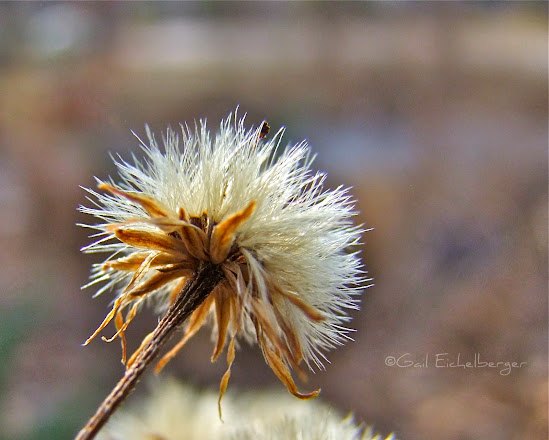
An ex-aster in winter

Why post it?  Because positive publicity is needed to educate our friends, neighbors and communities about how important even the smallest changes we make as gardeners can be for pollinators, birds, insects and mammals that live all around us. 

Why now?  My neighborhood is changing. Yours might be, too. Every day a 1950s ranch along with many of the mature oak, hickory and hackberry trees that have been there for over 75 years are bulldozed down. In place of the "bee lawns" composed of Salvia lyrata, Ruellia humilis, fleabane, Western Daisy, violets, self-heal, clovers, Dandelions that grew so well in the shallow soil that sits on top of limestone bedrock are sodded non-native lawns that get daily watering, whether it rains or not. Gone are the lightening bugs. Gone are the ground dwelling/nesting native bees. Gone is the habitat for insects, spiders and other critters. Gone is plant diversity. Gone are trees that provided for hundreds of moths, butterflies and other insects. Gone are the nesting sites for woodpeckers, hummingbirds, Chickadees and other birds. It breaks my heart. We can't stop the multi-million dollar houses from going up, but, maybe we can make a lot of educational noise and help our new neighbors see the value in providing for critters.

A gardener can hope!

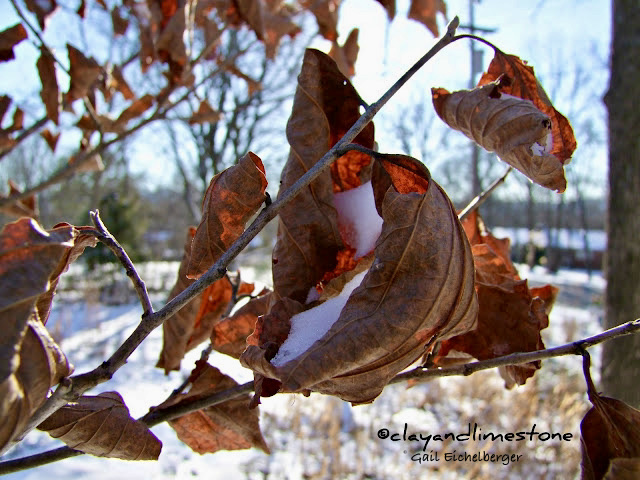
marcescence

An incomplete list of things you might consider doing or changing in your garden

Shrink your lawn and make your planting beds larger.

Plant your favorite native perennials and shrubs. Leave them standing after they've gone to seed to continue to provide for wildlife. What you plant in your yard makes a difference to wildlife. I garden for wildlife so every tree, shrub and plant is chosen with wildlife in mind.

Plant more natives and then consider planting even more. "A typical suburban landscape contains only 20-30% native plant species. Try reversing that trend in your own landscape by using 70-80% native species." (source

Commit to never, ever, ever, ever using pesticides in the garden.

Stay away from native plant hybrids and cultivars that are double flowered. They are sterile and have no pollen or nectar for insects and no seeds for the birds. If possible plant “true open-pollinated native wildflowers”

If you want to garden for wildlife and pollinators, don't let lack of space stop you! Plant your favorite wildflowers in large containers. You just might have the prairie or woodland garden you've always wanted...in a pot!
 
Create a water feature. Provide water year round that is accessible to birds, bees and other critters.

Show some soil! Our native ground nesting bees nest in bare soil, so don't mulch every square inch of your garden. 

Invite bugs into your garden. Plant annuals that attract beneficial bugs.

Learn to tolerate damaged plants. Imperfection is the new perfect.

Don't be in a rush to clean up the fall garden. Leave plant stalks and seed heads standing all winter. Leave those fallen leaves or as many as you can tolerate! Insects over winter in the fallen and decaying leaves.

Leave a layer of leaves as a soft landing material under trees for moths and butterflies to over winter. Many caterpillars drop to the ground from the trees in the fall.

Make a brush pile. Stack fallen brush, cut tree limbs, broken pots for ground beetles. Ground beetles are excellent at eating "bad bugs'. They're also good bird, toad and small critter food. 

Rethink what you consider a pest. Lots of good bugs eat aphids. Spiders are important predators and bird food!

Add nesting boxes for birds.

Plant shrubs and small trees that provide berries and nuts.

Keep a nature journal: Observe visitors to the water feature, make note of when they visit. Notice which flowers attract the most pollinators and which ones are just pretty faces. 

Join your state native plant society.

Join WildOnes even if there's no local group.

Take an online course on tree, fungi and wildflower id.

Take a walk in your neighborhood and observe nature. To quote Joanna Brichetto in Sidewalk Nature "Look Around. Nature is here, is us, our driveways, our baseboards, parks, and parking lots."

Buy the best wildflower, butterfly and bird id books for your state.

Read nature books to your children and grandchildren. 

Read! There are hundreds of books on gardening for wildlife, the environment, and rewilding our world. There are delightful blogs with wonderful and informative articles.


Please make suggestions to improve this list!
  

Welcome to Clay and Limestone and Wildflower Wednesday.  This day is about sharing wildflowers and other native plants no matter where one gardens~the UK, tropical Florida, Europe, Australia, Africa, South America, India or the coldest reaches of Canada. It doesn't matter if we sometimes share the same plants. How they grow and thrive in your garden is what matters most.

Please leave your links in comments,  I am not using Mr Linky.

Keep warm and keep positive,

xoxogail


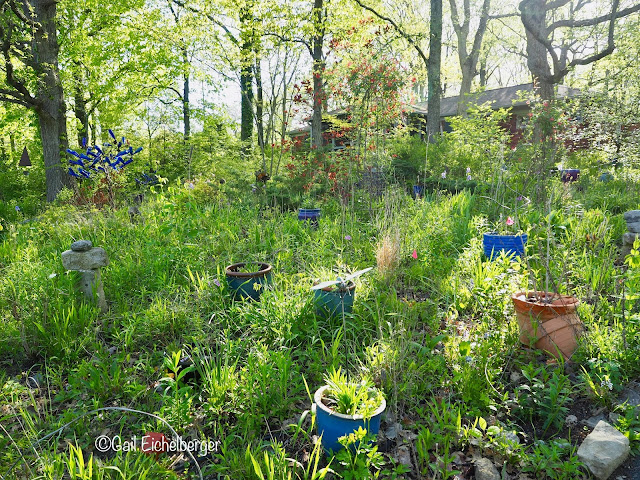
The sunny areas are the shallowest so I add containers

  Gail Eichelberger is a gardener and therapist in Middle Tennessee. She loves wildflowers and native plants and thoroughly enjoys writing about the ones she grows at Clay and Limestone. She reminds all that the words and images are the property of the author and cannot be used without written permission.