Home of the Practically Perfect Pink Phlox and other native plants for pollinators
Showing posts with label nature connection. Show all posts

Wednesday, October 1, 2025

First Wednesday Taking Care of Wildlife Challenge: Take Your Troubles To Your Garden

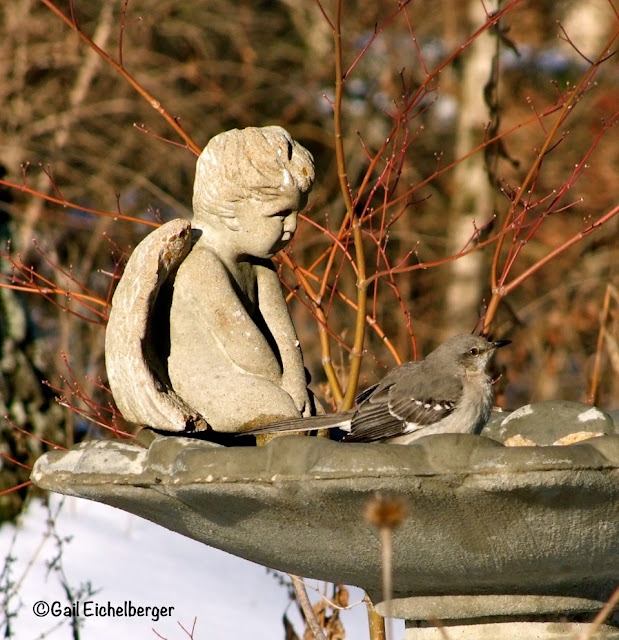
 It has a great big heart and arms that envelope a troubled spirit. 

 
That's what I did this morning. I was feeling frustrated, exhausted and sad, but, sitting in my garden I noticed that my heart stopped racing, my breathing slowed down and my thoughts were filled with peace instead of worries. I decided to focus on what was happening around me.  

 Robins were gobbling the ripe purple Callicarpa americana berries


Bees were all over the asters and goldenrods.

 They were climbing into the Salvia  azurea blooms and the Titmice were bathing in the birdbath. 

One gorgeous golden bumble loved the False dragonhead. 
I am so glad I took my troubles to the garden. 

This garden is where I found my voice, a point of view and learned some patience. I found my voice first as a pollinator gardener when I fell in love with bumbles and then realized they were my introduction to all of the critters that live in a garden habitat. When ever I get to a place where  I am feeling the big feels spending time just being in the garden is the best way for me get reacquainted with all of myself.

Wherever you go, go with all your heart. ~Confucius 

xoxogail 


In case you wondered-Research shows being outside has a positive impact on our health, both physically and mentally. (source)

  • Boosts immune system: You get a vitamin D infusion that helps fight viral infections. The forest air you breathe in is full of phytoncides, chemicals shed by forest plants. Phytoncides’ antifungal and antibacterial qualities stimulate your body to increase the white blood cells responsible for fighting tumor- and virus-infected cells. 
  • Enhances cognitive functions: It's a balm for our busy brains
  • Improves heart health: Lowers blood pressure
  • Promotes better sleep
  • Reduces stress: Improves mood. Just 20 minutes spent in any space that evokes nature can significantly reduce cortisol (stress hormone) levels.
  • Supports mental health: Time in nature can improve your mood and reduce the symptoms of anxiety and depression. It can alter the brain activity in your prefrontal cortex — the part regulating emotions. 

 Get more nature in your life 

  • Visit a City Parks: Take a walk, it doesn't have to be a long walk.
  • Unplug and Be Present: Leave your phone behind and focus on the sounds, sights, and smells of nature.  
  • Regular Exposure: Aim for at least 120 minutes of nature contact per week for the best results. That's about 17 minutes a day...
  • Embrace the Seasons: Take advantage of the changing seasons to spend time outdoors. It's cooling down and the leaves are starting to get their fall colors on. Get outdoors and look up at the trees.


Finally, spend time in your own garden or habitat. Be aware of what you're thinking and saying to yourself. Let go of criticisms and making a list of all the things you need to do. Don't weed, don't straighten up, just sit quietly and be. Take a look at what you've created. Celebrate the insects, birds and other critters that live in and visit your garden. You have so much to celebrate. Be at peace with yourself.

 "If we are not fully ourselves, truly in the present moment, we miss everything." Thich Nhat Hanh


 Want to Take the Taking Care of Wildlife In Our Gardens Challenge?

The first part of this challenge is to do something or even lots of things each month that supports critters living in our gardens. Gardening with native wildflowers, shrubs and trees that make sense for our ecoregion is a good place to start or continue (as the case may be). Plants and their pollinators are a classic example of mutualism: they have coevolved through evolutionary time in a reciprocal beneficial relationship. This is also true for other critters that visit and live in our gardens. 

Activities that increase our knowledge of the natural world are equally as valuable. Helping others learn about nature is included. Golly gee whiz, there are so many things you can do. 

The second part of the challenge is to post about it somewhere: Your blog, Instagram, Facebook, Twitter or even your neighborhood listserve. Wouldn't an article in the local paper be a coup for nature! Why post it? Because positive publicity is needed to educate our friends, neighbors and communities about how important even the smallest changes we make as gardeners can be for pollinators, birds, insects and mammals, including humans, that live all around us. 

Why now? My neighborhood is changing. Yours might be, too. Every day an older home along with many (if not all) of the mature oak, hickory, maple, Eastern cedar and hackberry trees are cut down. Insects, birds, even mammals lose their home site and food supplies when trees are cut down. During construction soil is compacted by bulldozers, trucks and piles of debris causing runoff; surface runoff that can carry pollution to streams and rivers. It's important that our neighbors have information about how important trees are to our ecosystem. Trees contribute to their environment by providing oxygen, improving air quality, climate amelioration, conserving water, preserving soil, and supporting wildlife.

In place of the "bee lawns" composed of Claytonia, Salvia lyrata, Ruellia humilis, fleabane, Western Daisy, Violets, self-heal, clovers, native grasses (in my neighborhood it's poverty oat grass) and sedges, they're sodded with non-native grasses. These monoculture turf lawns contribute nothing environmentally.  Here's what we lose when our diverse lawns are replaced with pristine turf grass:

  • Gone are the lightening bugs.
  • Gone are the ground dwelling/nesting native bees.
  • Gone is the habitat for insects, spiders and other critters. 
  • Gone is plant diversity. 
  • Gone are trees that provided for hundreds of moths, butterflies and other insects.
  • Gone are the nesting sites for woodpeckers, hummingbirds, Chickadees and other birds. 
  • Gone is a healthy foodweb.

 It breaks my heart. 

We can't stop the progmess, but, maybe we can make a lot of educational noise and help our new neighbors see the value in providing for critters and ultimately helping the environment.

A gardener can hope! 

xoxoGail 

Here's an incomplete list of things you might consider doing or changing in your garden, and things you can do for and/or in your community. But don't limit yourself to my list, make your own list or check out the internet for ideas.


Looking for ways to get involved go here for a list of environmental advocacy groups.

Buy the best wildflower, butterfly and bird id books for your state.

Read nature books to your children and grandchildren. Buy them nature books.

Get in the garden with your children and grandchildren.

Give nature books as baby shower gifts (Nature books for infants and toddlers)

Shrink your lawn and make your planting beds larger.

Plant your favorite native perennials and shrubs. Leave them standing after they've gone to seed to continue to provide for wildlife. What you plant in your yard makes a difference to wildlife. I garden for wildlife so every tree, shrub and plant is chosen with wildlife in mind.


Plant more natives and then consider planting even more. "A typical suburban landscape contains only 20-30% native plant species. Try reversing that trend in your own landscape by using 70-80% native species." (source

Plant for bloom from late spring to early winter. Bees are most active from February to November (longer in mild climates) late winter blooming Hamamelis vernalis and the earliest spring ephemerals (like the toothworts, hepaticas, spring beauties, and False rue-anemeone) are perfect plants for a variety of pollinators.

Commit to never, ever, ever, ever using pesticides in the garden.

Stay away from native plant hybrids and cultivars that are double flowered. They are sterile and have no pollen or nectar for insects and no seeds for the birds. If possible plant “true open-pollinated native wildflowers”

If you want to garden for wildlife and pollinators, don't let lack of space stop you! Plant your favorite wildflowers in large containers. You just might have the prairie or woodland garden you've always wanted...in a pot!
 
Create a water feature. Provide water year round that is accessible to birds, bees and other critters.

Make a rain garden in low spots to collect and mitigate runoff.

Show some soil! Our native ground nesting bees nest in bare soil, so don't mulch every square inch of your garden. 

Get rid of the plastic weed barriers in your garden, it's not good for anything.

Invite bugs into your garden. Plant annuals that attract beneficial bugs.


Learn to tolerate damaged plants. Imperfection is the new perfect.

Don't be in a rush to clean up the fall garden. Leave plant stalks and seed heads standing all winter. Leave those fallen leaves or as many as you can tolerate! Insects over winter in the fallen and decaying leaves. Leave a layer of leaves as a soft landing material under trees for moths and butterflies to over winter. Many caterpillars drop to the ground from the trees in the fall and need a soft landing site and a place to live over the winter.


Allow a fallen tree to remain in the garden. Limbs on the ground are a perfect shelter for small animals such as rabbits, chipmunks and squirrels and a habitat for beetles, termites and other insects.


Make a brush pile. Stack fallen brush, cut tree limbs, broken pots for ground beetles. Ground beetles are excellent at eating "bad bugs". Bugs are also good bird, toad and small critter food. 

Rethink what you consider a pest. Lots of good bugs eat aphids. Spiders are important predators and they're great bird food!

Add nesting boxes for birds. 

Turn off your yard up-lighting, eave lights and porch lights after 11pm. This is important for nocturnal critters including mammals, snakes, insects, bats, birds (especially during migration). (Birdcast suggestions)

Plant shrubs and small trees that provide berries and nuts.

Keep a nature journal: You can observe visitors to your water feature, make note of when they visit. Notice which flowers attract the most pollinators and which ones are just pretty faces. 

Join your state native plant society (Tennessee Native Plant Society)

Join WildOnes even if there's no local group you can join the national organization.  (Middle Tennessee WildOnes)

Support your local native plant sellers. (GroWild in middle Tennessee, Overhill Gardens in east Tennessee,  Resource Guide TN Native Plant Society)

Encourage your local garden clubs to offer native plant talks.

If your garden club has a plant sale encourage them to sell more native plants.

Get trained as a naturalist (Tennessee Naturalist Program. Almost every state has their own Master Naturalist training program

Take an online course on tree, fungi and wildflower id. 

Take an online course on designing with native plants.

Take a walk in your neighborhood and observe nature. To quote Joanna Brichetto in Sidewalk Nature "Look Around. Nature is here, is us, our driveways, our baseboards, parks, and parking lots."

Read! There are hundreds of books on gardening for wildlife, the environment, and rewilding our world. There are delightful blogs with wonderful and informative articles.

If you are already gardening with wildlife in mind then add a few signs that help educate your neighbors. (Xerces Society, Pollinator Partnership)

Join the Xerces Society.

Set up an information station where neighbors can pick up brochures about your garden and other info. 

Get certified (National Wildlife Federation, check to see what your state offers)

Support trees by joining the effort to make sure developers don't remove more trees than are necessary for their project. Work to make sure there are tree removal permits and that they are actually enforced in your community.


Visit


Gail Eichelberger is a gardener and therapist in Middle Tennessee. She loves wildflowers and native plants and thoroughly enjoys writing about the ones she grows at Clay and Limestone. She reminds all that the words and images are the property of the author and cannot be used without written permission.


Wednesday, October 2, 2024

First Wednesday Wildlife Challenge: Kids Need Time Outdoors


We need to get our kids outside more...There are many good reasons to be outside for all of us, but, it's especially true for children who seem to be spending less time outdoors than ever before. When researching the numbers I was shocked to read that the average child spends only 6 -7 minutes outdoors everyday. That's so different from my free to roam childhood when as a part of a small gang of neighborhood kids we rode bikes, climbed trees, explored the woodlands and were unsupervised almost all day. Each generation has less time outdoors, let alone unsupervised time outdoors. I am not recommending that you free range kids, just give them more opportunities to be outdoors in nature. There are so many benefits for them and for nature.  

What are kids doing if they aren't playing outside? They're spending a lot of time in front of electronic screens. The reality is that most kids are coming in way above what the American Academy of Pediatrics recommends. In fact, 87% of children had screen time exceeding the recommendations. The latest statistics show that most American children spend about three hours a day watching television. Watching television, working on a computer, looking at social media, or playing video games can total 5–7 hours a day. (source)


 The American Academy of Pediatrics recommends:

  •  no screen time before 18 months. 
  • introducing screen time gradually to children between 18 to 24 months
  • no more than one hour per day of high-quality programming for children from 2–5 years. (Sesame Street or Little Einsteins are considered high-quality programs)
  • kids 5–17, should get no more than two hours of screen time a day, not including virtual learning or homework. 


Here are six crucial ways playing outside helps children (from Harvard School of Medicine)

1.   Sunshine. Vitamin D production, improved immune system, healthy sleep and improved mood

2.  Exercise. Children should be active for an hour every day, and getting outside to play is one way to be sure that happens.

3.  Executive function. Being outside gives kids opportunities to practice problem solving, use their imagination, solve problems with playmates and help in developing other life skills.
 

4.  Taking risks. Children need to take some risks.  "Risk-taking is all about identity formation. As kids mature, they need opportunities to discover who they are, to set their own boundaries, and to establish their own values and beliefs apart from those of their parents. Wise risk-taking builds resilience, boosts confidence, encourages perseverance, and curbs fear." Climbing trees, jumping off boulders and walls, picking up bugs, and reaching out to make friends are ways kids can take a risk. Activities need to be age appropriate.

5.  Socialization. Children need to learn how to work together, to share, to cooperate, how to treat others and how to make and be a friend. 

6.  Appreciation of nature. So much of our world is changing, and not for the better. If a child grows up never walking in the woods, digging in soil, seeing animals in their habitat, climbing a mountain, playing in a stream, or staring at the endless horizon of an ocean, they may never really understand what there is to be lost. The future of our planet depends on our children; they need to learn to appreciate it, to connect to it.  Research shows that kids who grow up connected to nature are more often motivated to get involved in conservation actions. (source)

Visiting Warner Park Nature Center


As a gardener who gardens for wildlife it's been important for me to give my granddaughter time to explore and enjoy nature. We spend time in the garden observing bees and butterflies and looking for worms and insects. One morning this past week we went to watch the sun rise and I handed her my camera and let her go. The following three photos are a few she took.

mist rising led to a discussion of why

At eight years old she is already a vocal advocate for critters and nature and I hope that she will continue in this vein for all of her life. I believe that my primary role as a grandparent is to love unconditionally, but, I've been the family historian, a playmate, a baking teacher and a role model. The time we spend outdoors is incredibly valuable and I believe it is essential to helping her connect to nature while nurturing a sense of stewardship for nature.

snail on a wall

I've been connected to nature since I was a little kid. What does it mean to be connected to nature? It means we can enjoy it, empathize with it, feel responsible for it, be aware of it, show curiosity about it, choose to be out in it and  have an emotional and cognitive affinity for it.

Eric Fromm coined the term biophilia, but, it was popularized by Harvard biologist Edward O. Wilson through his 1984 book Biophilia. In it, Wilson proposed that humans' attraction to nature is genetically predetermined and the result of evolution. In other words, we are wired to be connected to nature.

birds on a wire caught her eye

There's something else to consider here. Kids growing up in our world can't help but be aware of the realities of climate change, biodiversity loss, and other environmental problems. They may have feelings of worry, fear, and even despair as a result of their exposure to the realities of climate change. Many of us have experienced this Eco-Anxiety as some refer to it. Eco-Anxiety is a perfectly reasonable response to the issues facing our planet. The good news is there are some very effective ways to help kids deal with it. Please be aware that all suggestions need to be appropriate for a child's age and maturity.

Suggestions from Earth Rangers:

  1. Empathize with them: Let them talk about their concerns, really listen, reassure them  but, don't discount them.
  2. Educate them: Offer opportunities to learn about climate change and suggest actions to protect the natural environment.
  3. Help them get involved/engage in stewardship: Help them build an insect habitat, plant a butterfly garden or encourage them to join an eco club at school.
  4. Help them get excited about nature: Take them on on nature scavenger hunt or take a fun class at a local nature center. Read books together.
  5. Give them agency: Allow them to teach us or others what they have learned about how to protect nature.

just a few books for younger readers and a few guides

As significant adults in a child's life we can get them outside to play. We can encourage connection to nature while helping them feel that any concerns/anxieties they have for the environment can actually be helpful if it leads to environmental action. We must help them feel empowered to take action and steer them toward activities that help them feel more in control. Adults, i.e. parents, aunts, uncles, grandparents, teachers, must be a role model for that action, too.

 xoxogail


 Take the Taking Care of Wildlife In Our Gardens Challenge


The first part of this challenge is to do something, even lots of things, each month that support the critters living in our gardens. Gardening with native wildflowers, shrubs and trees that make sense for our ecoregion is a good place to start or continue (as the case may be). Plants and their pollinators are a classic example of mutualism: they have coevolved through evolutionary time in a reciprocal beneficial relationship. This is also true for other critters that visit and live in our gardens. 

Activities that increase our knowledge of the natural world are equally as valuable. Helping others learn about nature is included. Golly gee whiz, there are so many things you can do. 

The second part of the challenge is to post about it somewhere: Your blog, Instagram, Facebook, Twitter or even your neighborhood listserve. Wouldn't an article in the local paper be a coup for nature! Why post it? Because positive publicity is needed to educate our friends, neighbors and communities about how important even the smallest changes we make as gardeners can be for pollinators, birds, insects and mammals, including humans, that live all around us. 

Why now? My neighborhood is changing. Yours might be, too. Every day an older home along with many (if not all) of the mature oak, hickory, maple, Eastern cedar and hackberry trees are cut down. Insects, birds, even mammals lose their home site and food supplies when we lose trees. During construction soil is compacted by bulldozers, trucks and piles of debris cause runoff; surface runoff that can carry pollution to streams and rivers. It's important that our neighbors and our community have information about how important trees are to our ecosystem. Trees contribute to their environment by providing oxygen, improving air quality, climate amelioration, conserving water, preserving soil, and supporting wildlife.

In place of the "bee lawns" composed of Claytonia, Salvia lyrata, Ruellia humilis, fleabane, Western Daisy, Violets, self-heal, clovers, native grasses (in my neighborhood it's poverty oat grass) and sedges, they're being sodded with non-native grasses. These monoculture turf lawns contribute nothing environmentally. Here's what we lose when our diverse lawns are replaced with pristine turf grass:

  • Gone are the lightening bugs.
  • Gone are the ground dwelling/nesting native bees.
  • Gone is the habitat for insects, spiders and other critters. 
  • Gone is plant diversity. 
  • Gone are trees that provided for hundreds of moths, butterflies and other insects.
  • Gone are the nesting sites for woodpeckers, hummingbirds, Chickadees and other birds. 
  • Gone is a healthy foodweb.

 It breaks my heart. 

We can't stop the progmess, but, maybe we can make a lot of educational noise and help our new neighbors see the value in providing for critters and ultimately helping the environment.

A gardener can hope! 

xoxoGail


Here's an incomplete list of things you might consider doing or changing in your garden, and things you can do for and/or in your community. But don't limit yourself to my list, make your own list or check out the internet for ideas.


Looking for ways to get involved go here for a list of environmental advocacy groups.

Buy the best wildflower, butterfly and bird id books for your state.

Read nature books to your children and grandchildren. Buy them nature books.

Get in the garden with your children and grandchildren. 


Give nature books as baby shower gifts (Nature books for infants and toddlers)

Shrink your lawn and make your planting beds larger.

Plant your favorite native perennials and shrubs. Leave them standing after they've gone to seed to continue to provide for wildlife. What you plant in your yard makes a difference to wildlife. I garden for wildlife so every tree, shrub and plant is chosen with wildlife in mind.


Plant more natives and then consider planting even more. "A typical suburban landscape contains only 20-30% native plant species. Try reversing that trend in your own landscape by using 70-80% native species." (source

Plant for bloom from late spring to early winter. Bees are most active from February to November (longer in mild climates) late winter blooming Hamamelis vernalis and the earliest spring ephemerals (like the toothworts, hepaticas, spring beauties, and False rue-anemeone) are perfect plants for a variety of pollinators.

Commit to never, ever, ever, ever using pesticides in the garden.

Stay away from native plant hybrids and cultivars that are double flowered. They are sterile and have no pollen or nectar for insects and no seeds for the birds. If possible plant “true open-pollinated native wildflowers”

If you want to garden for wildlife and pollinators, don't let lack of space stop you! Plant your favorite wildflowers in large containers. You just might have the prairie or woodland garden you've always wanted...in a pot!
 
Create a water feature. Provide water year round that is accessible to birds, bees and other critters.

Make a rain garden in low spots to collect and mitigate runoff.

Show some soil! Our native ground nesting bees nest in bare soil, so don't mulch every square inch of your garden. 

Get rid of the plastic weed barriers in your garden, it's not good for anything.

Invite bugs into your garden. Plant annuals that attract beneficial bugs.


Learn to tolerate damaged plants. Imperfection is the new perfect.

Don't be in a rush to clean up the fall garden. Leave plant stalks and seed heads standing all winter. Leave those fallen leaves or as many as you can tolerate! Insects over winter in the fallen and decaying leaves. Leave a layer of leaves as a soft landing material under trees for moths and butterflies to over winter. Many caterpillars drop to the ground from the trees in the fall and need a soft landing site and a place to live over the winter.

Allow a fallen tree to remain in the garden. Limbs on the ground are a perfect shelter for small animals such as rabbits, chipmunks and squirrels and a habitat for beetles, termites and other insects.


Make a brush pile. Stack fallen brush, cut tree limbs, broken pots for ground beetles. Ground beetles are excellent at eating "bad bugs". Bugs are also good bird, toad and small critter food. 

Rethink what you consider a pest. Lots of good bugs eat aphids. Spiders are important predators and they're great bird food!

Add nesting boxes for birds. 

Turn off your yard up-lighting, eave lights and porch lights after 11pm. This is important for nocturnal critters including mammals, snakes, insects, bats, birds (especially during migration). (Birdcast suggestions)

Plant shrubs and small trees that provide berries and nuts.

Keep a nature journal: You can observe visitors to your water feature, make note of when they visit. Notice which flowers attract the most pollinators and which ones are just pretty faces. 

Join your state native plant society (Tennessee Native Plant Society)

Join WildOnes even if there's no local group you can join the national organization.  (Middle Tennessee WildOnes)

Support your local native plant sellers. (GroWild in middle Tennessee, Overhill Gardens in east Tennessee,  Resource Guide TN Native Plant Society)

Encourage your local garden clubs to offer native plant talks.

If your garden club has a plant sale encourage them to sell more native plants.

Get trained as a naturalist (Tennessee Naturalist Program. Almost every state has their own Master Naturalist training program

Take an online course on tree, fungi and wildflower id. 

Take an online course on designing with native plants.

Take a walk in your neighborhood and observe nature. To quote Joanna Brichetto in Sidewalk Nature "Look Around. Nature is here, is us, our driveways, our baseboards, parks, and parking lots."

Read! There are hundreds of books on gardening for wildlife, the environment, and rewilding our world. There are delightful blogs with wonderful and informative articles.

If you are already gardening with wildlife in mind then add a few signs that help educate your neighbors. (Xerces Society, Pollinator Partnership)

Join the Xerces Society.

Set up an information station where neighbors can pick up brochures about your garden and other info. 

Get certified (National Wildlife Federation, check to see what your state offers)

Support trees by joining the effort to make sure developers don't remove more trees than are necessary for their project. Work to make sure there are tree removal permits and that they are actually enforced in your community.


Gail Eichelberger is a gardener and therapist in Middle Tennessee. She loves wildflowers and native plants and thoroughly enjoys writing about the ones she grows at Clay and Limestone. She reminds all that the words and images are the property of the author and cannot be used without written permission.