Home of the Practically Perfect Pink Phlox and other native plants for pollinators
Showing posts with label First Wednesday Wildlife Challenge. Show all posts

Wednesday, March 5, 2025

First Wednesday Challenge: It's Time to Plan for Spring Migration, Birds Need a Few Things


Spring migration is starting. The numbers are increasing quickly from thousands a night flying over to millions when it peaks later this spring. It's not too early, in fact it's time for us to think about how we can protect birds as they migrate over our cities and states.


Migration:

Millions of birds will be returning north to their breeding grounds where abundant food and nesting sites await them. Migration is a natural phenomena that happens every fall and spring. Their journey is physically taxing and the lack of adequate food supplies along the way, bad weather, exposure to predators and the ever increasing danger from colliding into lit up buildings all add to making this journey hazardous.


Spring migrating birds need food, water, shelter, nesting sites and dark skies. Here's a list of things you can do to help birds no matter what time of year they're migrating. 

 There are things we can do. Very important things!


Bird Safe Nashville


Let's take a closer look at how we can provide food and water:

Because we get a lot of joy from observing them in our gardens, Michael and I feed the birds and provide water year round. I garden for wildlife so the garden has been designed with critters in mind. In fact, nearly every plant has been chosen with birds, insects and other critters in mind.  We were lucky, our house came with a dozen oak trees which are known to host over 400 caterpillar species. Most of them live at the tops of the trees which is a perfect place for birds to find them. My native shrubs provide food, nesting and shelter for mammals and birds, as well as being a host plant to butterflies, moths and other insects that keep my wildflower garden thriving. Native plants are also a haven for tasty insects which so many migrants, particularly the Warblers need for fuel. 

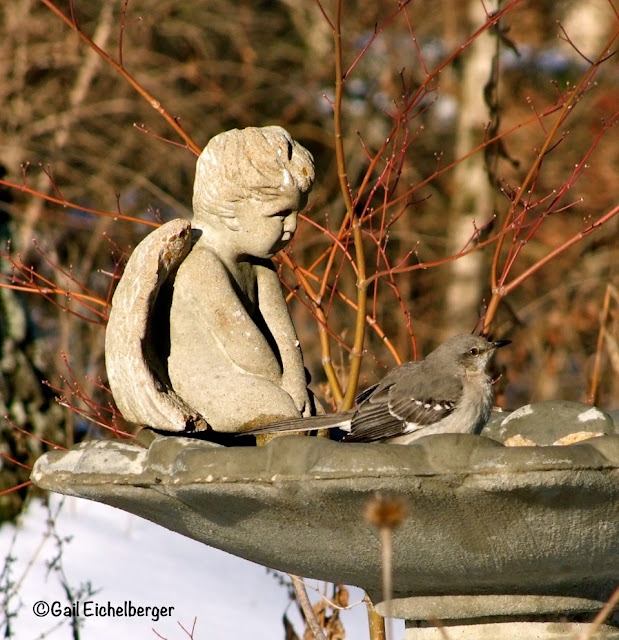
I hope that there's enough food in the garden for hungry migrating birds that stopover; if not, there will always be supplemental seed and suet in feeders and water in the bird baths and raised ponds. Biologists refer to places as “stopover” habitats, areas where birds stop to rest, eat, and seek shelter from predators. Some stopover sites are so large they can even be called “staging areas” because so many birds come together to rest and then continue their migration. One of the most famous staging areas around the world is along the Platte River in central Nebraska, where more than 500,000 sandhill cranes gather in a spectacle of migration! (source) That's on my "got to see list". Can you imagining what it must be like to see thousands of these fabulous birds and then watch them alight to begin their journey north?

Last fall we asked John, the owner of The Woodthrush, what we could be doing for migrating birds. He said that water was super important for migrating birds.

According to University of Rhode Island researcher, physiological ecologist Scott McWilliams,  here's what's going on with migrating birds. "The digestive systems of birds adjust to meet the changing energy demands of migration. The birds’ bellies increase in size and the cells get larger so they can eat more and store energy for their long flights. The digestive systems of migratory birds essentially shut down during migration so most of their energy can be used in flight. When they stop to eat along their routes, they eat less, until finally their systems re-adjust when they arrive at their destinations where food is plentiful again." (source)

Here's a little bit more about birds and water that you might like to know.

Birds need water just as much as they need food. The birds that live and visit our garden need dependable water to survive. Each day, an adult bird needs to drink enough water to make up 5 percent of its body weight to replace the water lost from waste removal, respiration and evaporation. Water performs a number of important functions: bathing, to clean feathers and remove parasites. They get some of their water/moisture from the insects and fruit they eat, but, they need to drink water every day.

How we can provide water:

  • Bird baths. Place them near cover so birds can hide from prey. Place in shade so water stays fresh. Change water often. I heat mine in winter so there is water for birds when it's freezing out.
  • Place water dishes on the ground since many birds prefer drinking water like this.
  • If you have the resources a pond or stream would be ideal.
  • Raised bed ponds need a way for birds to safely drink a well placed rock helps.
  • A shallow galvanized container with rocks for birds to perch on works well, too.
  • Misters, water wigglers, and drippers invite birds to come to bird baths and natural pools.
  • When desperate for rain I turn on an over head sprinkler for a short time and watch the birds fly in and out of the water. It's magical, they arrive the minute the water is turned on. It makes me happy and takes care of many of the critters. I do it for the birds post.


Migrating birds need this very important thing to happen.

Birds that migrate or hunt at night navigate by moonlight and starlight. Migratory birds depend on cues from properly timed seasonal schedules. Artificial lights can cause them to migrate too early or too late and miss ideal climate conditions for nesting, foraging, and other behaviors. It can also cause them to be attracted to illuminated building where they can collide and die. (source

Collision hazards for birds come in many forms and can affect many types of birds. In fact, nearly one billion birds collide with glass in the U.S. alone each year. Most of these (preventable) fatalities happen at homes and buildings shorter than four stories tall. Please make note of that fact...Birds are in danger of our lit-up homes, not just sky-scrappers, wind-turbines or towers.

According to research scientist Christopher Kyba, for nocturnal animals “the introduction of artificial light probably represents the most drastic change human beings have made to their environment.”

“Predators use light to hunt, and prey species use darkness as cover,” Kyba explains. “Near cities, cloudy skies are now hundreds or even thousands of times brighter than they were 200 years ago. We are only beginning to learn what a drastic effect this has had on nocturnal ecology.” (source)


Migrating Purple Martins last spring they will be returning this March!


One last thing.

So, this is my plea to you all. Please turn off your outdoor lights from 11pm to 6am every night.  I wish you would consider turning off your eave lights, tree up-lighting and porch lights every night, but if not always, please, turn them off during bird migration. For more information about the effects of artificial lighting on all living creatures go to my post First Wednesday Challenge: Every Day Needs A Night.

Thank for reading, xoxogail


The First Wednesday Challenge


Want to Take the Taking Care of Wildlife In Our Gardens Challenge?

The first part of this challenge is to do something, even lots of things, each month that support the critters living in our gardens. Gardening with native wildflowers, shrubs and trees that make sense for our ecoregion is a good place to start or continue (as the case may be). Plants and their pollinators are a classic example of mutualism: they have coevolved through evolutionary time in a reciprocal beneficial relationship. This is also true for other critters that visit and live in our gardens. 

Activities that increase our knowledge of the natural world are equally as valuable. Helping others learn about nature is included. Golly gee whiz, there are so many things you can do. 

The second part of the challenge is to post about it somewhere: Your blog, Instagram, Facebook, Twitter or even your neighborhood listserve. Wouldn't an article in the local paper be a coup for nature! Why post it? Because positive publicity is needed to educate our friends, neighbors and communities about how important even the smallest changes we make as gardeners can be for pollinators, birds, insects and mammals, including humans, that live all around us. 

Why now? My neighborhood is changing. Yours might be, too. Every day an older home along with many (if not all) of the mature oak, hickory, maple, Eastern cedar and hackberry trees are cut down. Insects, birds, even mammals lose their home site and food supplies when we lose trees. During construction soil is compacted by bulldozers, trucks and piles of debris cause runoff; surface runoff that can carry pollution to streams and rivers. It's important that our neighbors and our community have information about how important trees are to our ecosystem. Trees contribute to their environment by providing oxygen, improving air quality, climate amelioration, conserving water, preserving soil, and supporting wildlife.

In place of the "bee lawns" composed of Claytonia, Salvia lyrata, Ruellia humilis, fleabane, Western Daisy, Violets, self-heal, clovers, native grasses (in my neighborhood it's poverty oat grass) and sedges, they're being sodded with non-native grasses. These monoculture turf lawns contribute nothing environmentally. Here's what we lose when our diverse lawns are replaced with pristine turf grass:

  • Gone are the lightening bugs.
  • Gone are the ground dwelling/nesting native bees.
  • Gone is the habitat for insects, spiders and other critters. 
  • Gone is plant diversity. 
  • Gone are trees that provided for hundreds of moths, butterflies and other insects.
  • Gone are the nesting sites for woodpeckers, hummingbirds, Chickadees and other birds. 
  • Gone is a healthy foodweb.

 It breaks my heart. 

We can't stop the progmess, but, maybe we can make a lot of educational noise and help our new neighbors see the value in providing for critters and ultimately helping the environment.

A gardener can hope! 

xoxoGail


Here's an incomplete list of things you might consider doing or changing in your garden, and things you can do for and/or in your community. But don't limit yourself to my list, make your own list or check out the internet for ideas.


Looking for ways to get involved go here for a list of environmental advocacy groups.

Buy the best wildflower, butterfly and bird id books for your state.

Read nature books to your children and grandchildren. Buy them nature books.

Get in the garden with your children and grandchildren.

Give nature books as baby shower gifts (Nature books for infants and toddlers)

Shrink your lawn and make your planting beds larger.

Plant your favorite native perennials and shrubs. Leave them standing after they've gone to seed to continue to provide for wildlife. What you plant in your yard makes a difference to wildlife. I garden for wildlife so every tree, shrub and plant is chosen with wildlife in mind.


Plant more natives and then consider planting even more. "A typical suburban landscape contains only 20-30% native plant species. Try reversing that trend in your own landscape by using 70-80% native species." (source

Plant for bloom from late spring to early winter. Bees are most active from February to November (longer in mild climates) late winter blooming Hamamelis vernalis and the earliest spring ephemerals (like the toothworts, hepaticas, spring beauties, and False rue-anemeone) are perfect plants for a variety of pollinators.

Commit to never, ever, ever, ever using pesticides in the garden.

Stay away from native plant hybrids and cultivars that are double flowered. They are sterile and have no pollen or nectar for insects and no seeds for the birds. If possible plant “true open-pollinated native wildflowers”

If you want to garden for wildlife and pollinators, don't let lack of space stop you! Plant your favorite wildflowers in large containers. You just might have the prairie or woodland garden you've always wanted...in a pot!
 
Create a water feature. Provide water year round that is accessible to birds, bees and other critters.

Make a rain garden in low spots to collect and mitigate runoff.

Show some soil! Our native ground nesting bees nest in bare soil, so don't mulch every square inch of your garden. 

Get rid of the plastic weed barriers in your garden, it's not good for anything.

Invite bugs into your garden. Plant annuals that attract beneficial bugs.


Learn to tolerate damaged plants. Imperfection is the new perfect.

Don't be in a rush to clean up the fall garden. Leave plant stalks and seed heads standing all winter. Leave those fallen leaves or as many as you can tolerate! Insects over winter in the fallen and decaying leaves. Leave a layer of leaves as a soft landing material under trees for moths and butterflies to over winter. Many caterpillars drop to the ground from the trees in the fall and need a soft landing site and a place to live over the winter.

Allow a fallen tree to remain in the garden. Limbs on the ground are a perfect shelter for small animals such as rabbits, chipmunks and squirrels and a habitat for beetles, termites and other insects.


Make a brush pile. Stack fallen brush, cut tree limbs, broken pots for ground beetles. Ground beetles are excellent at eating "bad bugs". Bugs are also good bird, toad and small critter food. 

Rethink what you consider a pest. Lots of good bugs eat aphids. Spiders are important predators and they're great bird food!

Add nesting boxes for birds. 

Turn off your yard up-lighting, eave lights and porch lights after 11pm. This is important for nocturnal critters including mammals, snakes, insects, bats, birds (especially during migration). (Birdcast suggestions)

Plant shrubs and small trees that provide berries and nuts.

Keep a nature journal: You can observe visitors to your water feature, make note of when they visit. Notice which flowers attract the most pollinators and which ones are just pretty faces. 

Join your state native plant society (Tennessee Native Plant Society)

Join WildOnes even if there's no local group you can join the national organization.  (Middle Tennessee WildOnes)

Support your local native plant sellers. (GroWild in middle Tennessee, Overhill Gardens in east Tennessee,  Resource Guide TN Native Plant Society)

Encourage your local garden clubs to offer native plant talks.

If your garden club has a plant sale encourage them to sell more native plants.

Get trained as a naturalist (Tennessee Naturalist Program. Almost every state has their own Master Naturalist training program

Take an online course on tree, fungi and wildflower id. 

Take an online course on designing with native plants.

Take a walk in your neighborhood and observe nature. To quote Joanna Brichetto in Sidewalk Nature "Look Around. Nature is here, is us, our driveways, our baseboards, parks, and parking lots."

Read! There are hundreds of books on gardening for wildlife, the environment, and rewilding our world. There are delightful blogs with wonderful and informative articles.

If you are already gardening with wildlife in mind then add a few signs that help educate your neighbors. (Xerces Society, Pollinator Partnership)

Join the Xerces Society.

Set up an information station where neighbors can pick up brochures about your garden and other info. 

Get certified (National Wildlife Federation, check to see what your state offers)

Support trees by joining the effort to make sure developers don't remove more trees than are necessary for their project. Work to make sure there are tree removal permits and that they are actually enforced in your community.


Gail Eichelberger is a gardener, Tennessee Naturalist and nature writer in Middle Tennessee. She loves wildflowers and native plants and thoroughly enjoys writing about the ones she grows at Clay and Limestone. She reminds all that the words and images are the property of the author and cannot be used without written permission.


Wednesday, February 5, 2025

First Wednesday Wildlife Challenge: Soil Is More Than Dirt

Soil is a dynamic, living environment that supports and feeds life. Soil is the earthy material that plants grow in. It is composed of a matrix of minerals, organic matter, air and water. Each component is important for supporting plant growth, microbial communities and chemical decomposition. The soil ecosystem can be defined as an interdependent life-support system. Some scientists refer to soil as Earth's living skin.

Soil after 30+ years of leaving the leaves and top dressing with compost

This post is intended to be an introduction to soils and is not a deep dive into a very complex topic. The purpose of this post is to give you a starting point in case you want to dive deeper. I do hope you're encouraged to learn more about the soils in your part of the world and that you get engaged in activities that promote soil health.


Source

Soil scientists describe soils using a number of characteristics, but we gardeners should at least know our soil's texture (whether it's sandy, loamy, or clay), its drainage capabilities, pH level, nutrient content, and organic matter percentage. Those are the factors that significantly impact plant growth and determine if any amendments might be needed. Gardeners also need to know that soil can die, that it is a non-renewable resource and that we have the power to protect it.

Ordovician limestone is my major harvest

My garden soil is nearly neutral and it's heavier and darker than some other soils in middle Tennessee. It's shallow (1 to 6 inches) and sits on top of 400 million year old Ordovician limestone boulders and bedrock. Friends who live about ten miles away have vastly different soil than mine; it's deeper with a different mineral composition that changes the PH, the texture and nutrient content. I plant according to my soil's conditions. My only amendments are leaving the leaves each fall and topdressing some plants with compost. If you are uncertain get your soil tested before adding amendments and then top dress with compost and leave the leaves.

There are boulders under those containers

When you garden on shallow soil you tend to think about soil...a lot! Especially when you visit a garden that has deep soil, or you need to purchase large quantities of soil products for the two stock tanks you bought to expand your container gardening. 

I do think about soil, it's why I decided to research it and make it a First Wednesday Wildlife Challenge post. Most of you already know that soil is more than dirt. The difference  Soil = Dirt (sand, silt, clay) + Organic Matter + Organisms. You can't have soil without dirt, but you CAN have dirt that's not soil. Basically, if there's no life or organic matter mixed in with the sand/silt/clay, then you're working with Dirt. (source)

Soil has a super important job

  • Soil is a living ecosystem made up of living organisms, minerals, water, and air. It's a dynamic system that's constantly changing, growing, and breathing. It's highly biodiverse containing a vast variety of organisms including bacteria, fungi, insects, and other small creatures, all interacting within a complex ecosystem; making it a significant reservoir of biodiversity on the planet. 
  • It's the foundation for plant growth
  • It filters and purifies water
  • It reduces flooding
  • With proper management it can store significant amounts of carbon, helping to combat climate change by keeping it from being released into the atmosphere. Carbon sequestration is a fancy way of saying carbon storage.
  • Understanding its properties and learning how to manage it sustainably goes a long way to ensure food security as well as environmental health. 

Soil degradation, where soil loses the physical, chemical, or biological qualities that support life, is a natural process but it is being accelerated by human activity. The reality is that it takes thousands of years to create an inch of fertile topsoil, but it can be destroyed in minutes. Conserving and protecting the soil is the best way to make sure the soil stays alive and healthy. We can all do our part in keeping the soil healthy. 

  • Plant more native trees; their leaves, trunk and roots store carbon
  • Work to insure that your community values and protects trees
  • Restore grasslands and keep them healthy
  • Plant cover crops
  • Stop using NPK fertilizers, unless it's absolutely necessary
  • Stop using herbicides
  • Leave the leaves  
  • Be mindful of disturbing the soil and eliminate compaction
  • Use compost and add humus
  • Stop spraying for mosquitos the chemicals settle on the ground killing organisms in the soil
  • Practice no till farming and gardening; tilling releases carbon. 
  • Farmers and big agriculture must change how they farm. We need to replace our reliance on monoculture farming and return to crop rotation in order to give soil time to replenish the nutrients needed by plants
  • Let the stalks, stems and stumps of plants return to the soil as organic matter.
  • Compost food scraps to add to soil when decomposed.
  • A well planted garden that has a living mulch keeps soil from eroding. Eroding soil pollutes the air and water and makes them unsafe for all of us to breathe and use.

Our soil needs all the help it can get. It is an irreplaceable resource and necessary for sustaining life on this planet. We need to act now to ensure that soil is a priority in our communities. We still have time to rebuild our degraded soils. It’s time for all of us, our neighborhoods, cities,  towns, companies, and countries to help save our soils. This may be  one of the great challenges for humanity in the 21st century.

xoxoGail


Here's a recap of what the First Wednesday Monthly Challenge is all about.


Want to Take the Taking Care of Wildlife In Our Gardens Challenge?

The first part of this challenge is to do something, even lots of things each month that support the critters living in our gardens. Gardening with native wildflowers, shrubs and trees that make sense for our ecoregion is a good place to start or continue (as the case may be). Plants and their pollinators are a classic example of mutualism: they have coevolved through evolutionary time in a reciprocal beneficial relationship. This is also true for other critters that visit and live in our gardens. 

Activities that increase our knowledge of the natural world are equally as valuable. Helping others learn about nature is included. Golly gee whiz, there are so many things you can do. 

The second part of the challenge is to post about it somewhere: Your blog, Instagram, Facebook, Twitter or even your neighborhood listserve. Wouldn't an article in the local paper be a coup for nature! Why post it? Because positive publicity is needed to educate our friends, neighbors and communities about how important even the smallest changes we make as gardeners can be for pollinators, birds, insects and mammals, including humans, that live all around us. 

Why now? My neighborhood is changing. Yours might be, too. Every day an older home along with many (if not all) of the mature oak, hickory, maple, Eastern cedar and hackberry trees are cut down. Insects, birds, even mammals lose their home site and food supplies when we lose trees. During construction soil is compacted by bulldozers, trucks and piles of debris cause runoff; surface runoff that can carry pollution to streams and rivers. It's important that our neighbors and our community have information about how important trees are to our ecosystem. Trees contribute to their environment by providing oxygen, improving air quality, climate amelioration, conserving water, preserving soil, and supporting wildlife.

In place of the "bee lawns" composed of Claytonia, Salvia lyrata, Ruellia humilis, fleabane, Western Daisy, Violets, self-heal, clovers, native grasses (in my neighborhood it's poverty oat grass) and sedges, they're being sodded with non-native grasses. These monoculture turf lawns contribute nothing environmentally. Here's what we lose when our diverse lawns are replaced with pristine turf grass:

  • Gone are the lightening bugs.
  • Gone are the ground dwelling/nesting native bees.
  • Gone is the habitat for insects, spiders and other critters. 
  • Gone is plant diversity. 
  • Gone are trees that provided for hundreds of moths, butterflies and other insects.
  • Gone are the nesting sites for woodpeckers, hummingbirds, Chickadees and other birds. 
  • Gone is a healthy foodweb.

 It breaks my heart. 

We can't stop the progmess, but, maybe we can make a lot of educational noise and help our new neighbors see the value in providing for critters and ultimately helping the environment.

A gardener can hope! 

xoxoGail


Here's an incomplete list of things you might consider doing or changing in your garden, and things you can do for and/or in your community. But don't limit yourself to my list, make your own list or check out the internet for ideas.


Looking for ways to get involved go here for a list of environmental advocacy groups.

Buy the best wildflower, butterfly and bird id books for your state.

Read nature books to your children and grandchildren. Buy them nature books.

Get in the garden with your children and grandchildren.

Give nature books as baby shower gifts (Nature books for infants and toddlers)

Shrink your lawn and make your planting beds larger.

Plant your favorite native perennials and shrubs. Leave them standing after they've gone to seed to continue to provide for wildlife. What you plant in your yard makes a difference to wildlife. I garden for wildlife so every tree, shrub and plant is chosen with wildlife in mind.


Plant more natives and then consider planting even more. "A typical suburban landscape contains only 20-30% native plant species. Try reversing that trend in your own landscape by using 70-80% native species." (source

Plant for bloom from late spring to early winter. Bees are most active from February to November (longer in mild climates) late winter blooming Hamamelis vernalis and the earliest spring ephemerals (like the toothworts, hepaticas, spring beauties, and False rue-anemeone) are perfect plants for a variety of pollinators.

Commit to never, ever, ever, ever using pesticides in the garden.

Stay away from native plant hybrids and cultivars that are double flowered. They are sterile and have no pollen or nectar for insects and no seeds for the birds. If possible plant “true open-pollinated native wildflowers”

If you want to garden for wildlife and pollinators, don't let lack of space stop you! Plant your favorite wildflowers in large containers. You just might have the prairie or woodland garden you've always wanted...in a pot!
 
Create a water feature. Provide water year round that is accessible to birds, bees and other critters.

Make a rain garden in low spots to collect and mitigate runoff.

Show some soil! Our native ground nesting bees nest in bare soil, so don't mulch every square inch of your garden. 

Get rid of the plastic weed barriers in your garden, it's not good for anything.

Invite bugs into your garden. Plant annuals that attract beneficial bugs.


Learn to tolerate damaged plants. Imperfection is the new perfect.

Don't be in a rush to clean up the fall garden. Leave plant stalks and seed heads standing all winter. Leave those fallen leaves or as many as you can tolerate! Insects over winter in the fallen and decaying leaves. Leave a layer of leaves as a soft landing material under trees for moths and butterflies to over winter. Many caterpillars drop to the ground from the trees in the fall and need a soft landing site and a place to live over the winter.

Allow a fallen tree to remain in the garden. Limbs on the ground are a perfect shelter for small animals such as rabbits, chipmunks and squirrels and a habitat for beetles, termites and other insects.


Make a brush pile. Stack fallen brush, cut tree limbs, broken pots for ground beetles. Ground beetles are excellent at eating "bad bugs". Bugs are also good bird, toad and small critter food. 

Rethink what you consider a pest. Lots of good bugs eat aphids. Spiders are important predators and they're great bird food!

Add nesting boxes for birds. 

Turn off your yard up-lighting, eave lights and porch lights after 11pm. This is important for nocturnal critters including mammals, snakes, insects, bats, birds (especially during migration). (Birdcast suggestions)

Plant shrubs and small trees that provide berries and nuts.

Keep a nature journal: You can observe visitors to your water feature, make note of when they visit. Notice which flowers attract the most pollinators and which ones are just pretty faces. 

Join your state native plant society (Tennessee Native Plant Society)

Join WildOnes even if there's no local group you can join the national organization.  (Middle Tennessee WildOnes)

Support your local native plant sellers. (GroWild in middle Tennessee, Overhill Gardens in east Tennessee,  Resource Guide TN Native Plant Society)

Encourage your local garden clubs to offer native plant talks.

If your garden club has a plant sale encourage them to sell more native plants.

Get trained as a naturalist (Tennessee Naturalist Program. Almost every state has their own Master Naturalist training program

Take an online course on tree, fungi and wildflower id. 

Take an online course on designing with native plants.

Take a walk in your neighborhood and observe nature. To quote Joanna Brichetto in Sidewalk Nature "Look Around. Nature is here, is us, our driveways, our baseboards, parks, and parking lots."

Read! There are hundreds of books on gardening for wildlife, the environment, and rewilding our world. There are delightful blogs with wonderful and informative articles.

If you are already gardening with wildlife in mind then add a few signs that help educate your neighbors. (Xerces Society, Pollinator Partnership)

Join the Xerces Society.

Set up an information station where neighbors can pick up brochures about your garden and other info. 

Get certified (National Wildlife Federation, check to see what your state offers)

Support trees by joining the effort to make sure developers don't remove more trees than are necessary for their project. Work to make sure there are tree removal permits and that they are actually enforced in your community.


Gail Eichelberger is a gardener, Tennessee Naturalist and nature writer in Middle Tennessee. She loves wildflowers and native plants and thoroughly enjoys writing about the ones she grows at Clay and Limestone. She reminds all that the words and images are the property of the author and cannot be used without written permission.

Wednesday, November 6, 2024

First Wednesday Challenge: A Conversation About Leaves


It's the First Wednesday Taking Care of Wildlife In Our Gardens Challenge and I'm here to talk about leaves.

Leaves are miraculous and beautiful....In my part of the world it's golden leaf time. Elms, shagbark hickories, spicebushes, Eastern hop-hornbeam, witch hazels and maples are glowing. I love autumn.

I've known since I was a little kid that leaves were a lot of fun. Back then I loved walking through the leaves that had fallen on the sidewalks, they crunched and crackled when you stepped on them. Neighbors made great piles that were fun to jump into and later that day they burned them creating a huge bonfire. Honestly, that's a smell that takes me back a few years.

In middle school science I learned that the job of a leaf was to make food for the plant. But being a curious person, I wanted to see what an internet search would yield. Searching "the job of a leaf" yielded thousands of pages. Almost all start with this simple explanation: "The most important job of a leaf is to make food for the plant. They're responsible for turning sunlight into food."

They're especially beautiful in the fall.

A few pages into the search I found a source that expanded on that definition.


 "A leaf is considered one of the most important parts of a plant as it is a source of food for the plant itself and also for animals who feed on it."(source)

Wow! I loved reading that. Finally, a definition that acknowledged that an important job for leaves was not only feeding the tree, but also feeding animals.* By animals they meant insects or as E.O. Wilson defined them, the little things that run the world.

 Dr Wilson wrote a paper in 1987 hypothesizing what would happen if insects disappeared. He concluded that most flowering plants would disappear (because they’re pollinated by insects), the food web that supports amphibians, reptiles, birds, mammals, etc. would quickly collapse, and the biosphere (living part of the world) would rot due to the loss of insects that consume dead plant and animal matter.

Insects are still disappearing.

Title: Magical Garden


Unfortunately, we've done too good a job of eradicating bugs! We've armed homeowners with pesticides, we've hired folks to spray yards for mosquitoes (they kill all insects), we plant non native plants that aren't host plants for insect young, we've lost natural areas, and then every fall we pay lawn service contractors to haul away one of our most valuable ecological resources-fallen leaves.

Yes, fallen leaves are one of our most valuable resources for the health of our gardens

Leaves can:

  • protect your plants’ roots from drying out or freezing
  • suppress weeds
  • preserve soil moisture
  • decay into leaf mold which is a great soil amendment
  • return nutrients to the soil 
  • shelter seeds so they can bloom
  • be part of a soft landing for insects
  • btw, a thin layer on your lawn will not smother it, instead it can do all the things we've listed in this list for your lawn     

 And...you can still have fun with leaves. Build a brush shelter with your favorite little kid. Use branches, sticks and stems, and leaves to make brush piles that will shelter native wildlife. It's also okay to jump into a leaf pile.


Leaves are a significant part of a soft landing. "Soft landings are diverse native plantings under keystone trees (or any other regionally appropriate native tree). These plantings provide critical shelter and habitat for one or more life cycle stages of moths, butterflies, and beneficial insects such as bumble bees, fireflies, lacewings, and beetles. In addition to plants, soft landings also include leaf litter, duff, and plant debris. " (Heather Holm) Soft landings also provide critical shelter for toads, lizards and turtles and mammals.

soft landing for

I wish I could convince our neighbors that fallen leaves are valuable and not the enemy. Their leaf blower brigades have arrived and they're blowing all the leaves off their lawns and their foundation beds onto tarps that are emptied into trucks and hauled away.

They return weekly to wage a noisy and destructive war against every leaf and small twig that might have landed on the lawn. This war against nature is costly for the environment; the fertilized and manicured mono-cultural lawn is made even more valueless for wildlife and the ecosystem. There's nothing in a mono-cultural lawn for insects or birds to eat and they've eliminated all the leaves that could have been a part of the soft landing.

People argue that the leaves will smother their lawn and plantings? I have a bee friendly lawn and so far, it hasn't smothered my wildflowers, my sedges or my perennials. But, if that's a concern, then do what I do when leaves are too deep.

What do I do...I gently rake or kindly sweep the leaves that fall on my walkways and driveway into the garden beds. I relocate especially deep piles of leaves by gently raking them onto a tarp and moving them to a wilder part of the garden. But, most leaves stay where they fall. 

My shallow clay soil is richer and healthier from 35+ years of letting leaves stay where they fall. Decaying leaves have mulched my wildflowers, added organic matter to the soil, improved the soil structure, and provided nutrients for the microbial communities.  

And it doesn't cost a thing.

Let me leave you with this quote from the Xerces Society. I hope it helps you decide to let the leaves stay in your garden.

There are so many animals that live in leaves: spiders, snails, worms, beetles, millipedes, mites, and more—that support the chipmunks, turtles, birds, and amphibians that rely on these insects for food.  It’s easy to see how important leaves really are to sustaining the natural web of life.(Xerces Society source)

xoxogail

*It wasn't until I fell in love with native wildflowers that I learned that insects have both a mutualistic (plants feed insects and insects pollinate plants) and evolutionary relationship with plants. "The entire food web is based on interactions between plants and organisms. Native plants feed a native insect population. This is an evolutionary relationship, and these relationships are not forged quickly. Some insects need certain plants. We lose species diversity when a species does not have the food it needs.” ( Kate Venturini Hardesty)

Take the Taking Care of Wildlife In Our Gardens Challenge


The first part of this challenge is to do something, even lots of things, each month that support the critters living in our gardens. Gardening with native wildflowers, shrubs and trees that make sense for our ecoregion is a good place to start or continue (as the case may be). Plants and their pollinators are a classic example of mutualism: they have coevolved through evolutionary time in a reciprocal beneficial relationship. This is also true for other critters that visit and live in our gardens. 

Activities that increase our knowledge of the natural world are equally as valuable. Helping others learn about nature is included. Golly gee whiz, there are so many things you can do. 

The second part of the challenge is to post about it somewhere: Your blog, Instagram, Facebook, Twitter or even your neighborhood listserve. Wouldn't an article in the local paper be a coup for nature! Why post it? Because positive publicity is needed to educate our friends, neighbors and communities about how important even the smallest changes we make as gardeners can be for pollinators, birds, insects and mammals, including humans, that live all around us. 

Why now? My neighborhood is changing. Yours might be, too. Every day an older home along with many (if not all) of the mature oak, hickory, maple, Eastern cedar and hackberry trees are cut down. Insects, birds, even mammals lose their home site and food supplies when we lose trees. During construction soil is compacted by bulldozers, trucks and piles of debris cause runoff; surface runoff that can carry pollution to streams and rivers. It's important that our neighbors and our community have information about how important trees are to our ecosystem. Trees contribute to their environment by providing oxygen, improving air quality, climate amelioration, conserving water, preserving soil, and supporting wildlife.

In place of the "bee lawns" composed of Claytonia, Salvia lyrata, Ruellia humilis, fleabane, Western Daisy, Violets, self-heal, clovers, native grasses (in my neighborhood it's poverty oat grass) and sedges, they're being sodded with non-native grasses. These monoculture turf lawns contribute nothing environmentally. Here's what we lose when our diverse lawns are replaced with pristine turf grass:

  • Gone are the lightening bugs.
  • Gone are the ground dwelling/nesting native bees.
  • Gone is the habitat for insects, spiders and other critters. 
  • Gone is plant diversity. 
  • Gone are trees that provided for hundreds of moths, butterflies and other insects.
  • Gone are the nesting sites for woodpeckers, hummingbirds, Chickadees and other birds. 
  • Gone is a healthy foodweb.

 It breaks my heart. 

We can't stop the progmess, but, maybe we can make a lot of educational noise and help our new neighbors see the value in providing for critters and ultimately helping the environment.

A gardener can hope! 

xoxoGail


Here's an incomplete list of things you might consider doing or changing in your garden, and things you can do for and/or in your community. But don't limit yourself to my list, make your own list or check out the internet for ideas.


Looking for ways to get involved go here for a list of environmental advocacy groups.

Buy the best wildflower, butterfly and bird id books for your state.

Read nature books to your children and grandchildren. Buy them nature books.

Get in the garden with your children and grandchildren. 


Give nature books as baby shower gifts (Nature books for infants and toddlers)

Shrink your lawn and make your planting beds larger.

Plant your favorite native perennials and shrubs. Leave them standing after they've gone to seed to continue to provide for wildlife. What you plant in your yard makes a difference to wildlife. I garden for wildlife so every tree, shrub and plant is chosen with wildlife in mind.


Plant more natives and then consider planting even more. "A typical suburban landscape contains only 20-30% native plant species. Try reversing that trend in your own landscape by using 70-80% native species." (source

Plant for bloom from late spring to early winter. Bees are most active from February to November (longer in mild climates) late winter blooming Hamamelis vernalis and the earliest spring ephemerals (like the toothworts, hepaticas, spring beauties, and False rue-anemeone) are perfect plants for a variety of pollinators.

Commit to never, ever, ever, ever using pesticides in the garden.

Stay away from native plant hybrids and cultivars that are double flowered. They are sterile and have no pollen or nectar for insects and no seeds for the birds. If possible plant “true open-pollinated native wildflowers”

If you want to garden for wildlife and pollinators, don't let lack of space stop you! Plant your favorite wildflowers in large containers. You just might have the prairie or woodland garden you've always wanted...in a pot!
 
Create a water feature. Provide water year round that is accessible to birds, bees and other critters.

Make a rain garden in low spots to collect and mitigate runoff.

Show some soil! Our native ground nesting bees nest in bare soil, so don't mulch every square inch of your garden. 

Get rid of the plastic weed barriers in your garden, it's not good for anything.

Invite bugs into your garden. Plant annuals that attract beneficial bugs.


Learn to tolerate damaged plants. Imperfection is the new perfect.

Don't be in a rush to clean up the fall garden. Leave plant stalks and seed heads standing all winter. Leave those fallen leaves or as many as you can tolerate! Insects over winter in the fallen and decaying leaves. Leave a layer of leaves as a soft landing material under trees for moths and butterflies to over winter. Many caterpillars drop to the ground from the trees in the fall and need a soft landing site and a place to live over the winter.

Allow a fallen tree to remain in the garden. Limbs on the ground are a perfect shelter for small animals such as rabbits, chipmunks and squirrels and a habitat for beetles, termites and other insects.


Make a brush pile. Stack fallen brush, cut tree limbs, broken pots for ground beetles. Ground beetles are excellent at eating "bad bugs". Bugs are also good bird, toad and small critter food. 

Rethink what you consider a pest. Lots of good bugs eat aphids. Spiders are important predators and they're great bird food!

Add nesting boxes for birds. 

Turn off your yard up-lighting, eave lights and porch lights after 11pm. This is important for nocturnal critters including mammals, snakes, insects, bats, birds (especially during migration). (Birdcast suggestions)

Plant shrubs and small trees that provide berries and nuts.

Keep a nature journal: You can observe visitors to your water feature, make note of when they visit. Notice which flowers attract the most pollinators and which ones are just pretty faces. 

Join your state native plant society (Tennessee Native Plant Society)

Join WildOnes even if there's no local group you can join the national organization.  (Middle Tennessee WildOnes)

Support your local native plant sellers. (GroWild in middle Tennessee, Overhill Gardens in east Tennessee,  Resource Guide TN Native Plant Society)

Encourage your local garden clubs to offer native plant talks.

If your garden club has a plant sale encourage them to sell more native plants.

Get trained as a naturalist (Tennessee Naturalist Program. Almost every state has their own Master Naturalist training program

Take an online course on tree, fungi and wildflower id. 

Take an online course on designing with native plants.

Take a walk in your neighborhood and observe nature. To quote Joanna Brichetto in Sidewalk Nature "Look Around. Nature is here, is us, our driveways, our baseboards, parks, and parking lots."

Read! There are hundreds of books on gardening for wildlife, the environment, and rewilding our world. There are delightful blogs with wonderful and informative articles.

If you are already gardening with wildlife in mind then add a few signs that help educate your neighbors. (Xerces Society, Pollinator Partnership)

Join the Xerces Society.

Set up an information station where neighbors can pick up brochures about your garden and other info. 

Get certified (National Wildlife Federation, check to see what your state offers)

Support trees by joining the effort to make sure developers don't remove more trees than are necessary for their project. Work to make sure there are tree removal permits and that they are actually enforced in your community.


Gail Eichelberger is a gardener and therapist in Middle Tennessee. She loves wildflowers and native plants and thoroughly enjoys writing about the ones she grows at Clay and Limestone. She reminds all that the words and images are the property of the author and cannot be used without written permission.