Home of the Practically Perfect Pink Phlox and other native plants for pollinators
Showing posts with label Entire-leaf Western Daisy. Show all posts

Wednesday, November 25, 2015

Wildflower Wednesday: Thankful for wildflowers and you

The flowers are gone from the garden, except a few blooms of the last to bloom ex-asters, one or two tiny fleabanes hidden beneath fallen leaves, a Blanketflower and Verbesina virginica's marvelous and magical frost flowers.
 I never tire of seeing the frost flowers blooming in my garden. All it takes is a warm winter day followed by a cold winter night. During the day, Verbesina virginica's roots draw water up into the stem and later that night freezing temperatures force the sap from the stems where they freeze into sculptural ice candy flower curls. I love finding them on an early morning walk, they remind me that magic is still happening and that the garden is just resting.

Amsonia's curlie cues are magical in the autumn sun
 In the mid-south the garden and gardener rest for a short time. Dreaming and planning don't stop.
 I walk the leaf covered paths and assess what worked and didn't. I notice that the Hypericum frondosum is moving toward its hyper-colored late fall look and that something has been snacking on its leaves. The Illicium parviflorum 'Florida Sunshine' that I've been trialing is doing okay despite a very dry summer. I like it enough that I added two more. They look good massed but, I am using them as specimen plants. This is a very green garden in mid summer and needs color where ever I can add it.
The Oakleaf hydrangeas are still brilliantly colored and their seeds heads are gorgeous.
The seedheads will stay put until late winter.
 I am so glad they're a part of the shrub layer in this garden, they add drama, color and texture.

  I noticed the native annuals and biennials have germinated.
Western Daisy

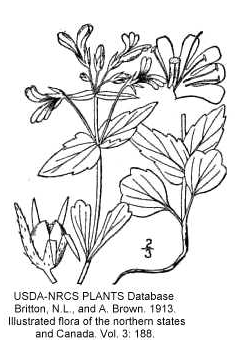
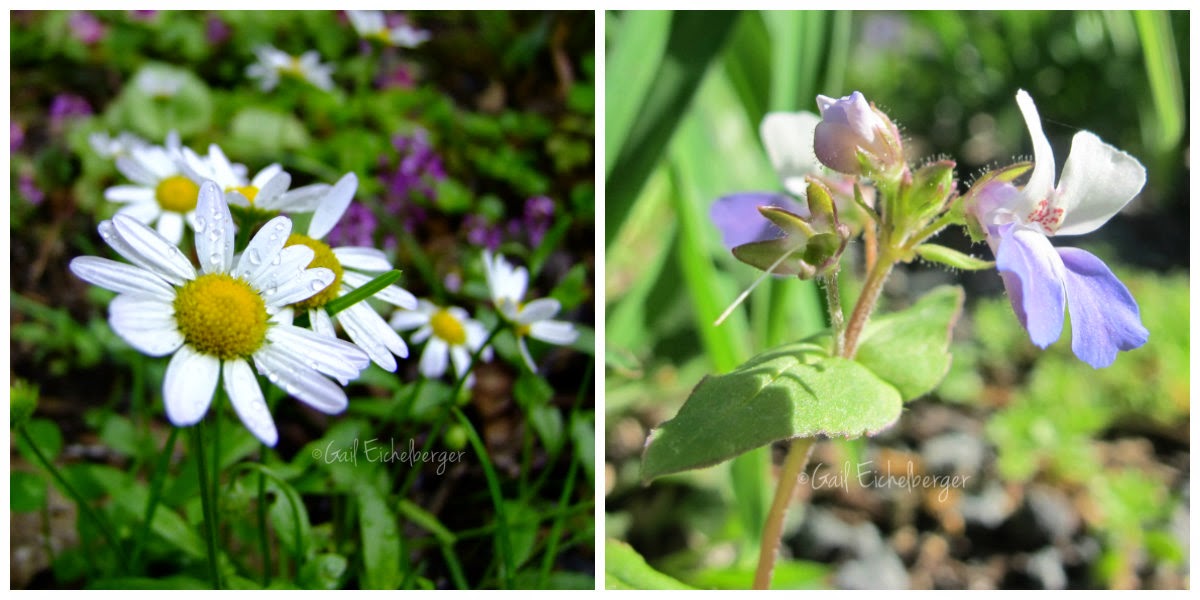
I've two annual natives that I am crazy about. Astranthium integrifolium/Entireleaf Western Daisy which I found naturally growing in the weedy back lawn almost 30 years ago and Collinsia verna/Blue-eyed Mary, which I added many years ago. They've both made a home for themselves in the shade of the taller rough and tumble wildflowers in the sunny Susans bed and as long as they are always allowed to go to seed they will thrive. One little plant can make a dozen offspring before you know it.
I hope you're fortunate enough to have a biennial like Phacelia bipinnatifida. The second year Phacelia rosettes are everywhere and that means early next spring will be dressed in gorgeous purple flowers covered with Mason bees. When I added Phacelia to the garden I was lucky enough to have first and second year rosettes.  I've had blooms every year since. Biennials are adept self-seeders and can be in your garden forever if you let them be!

The garden is a sea of browning leaves and seedheads. I think  they're beautiful. The promise of spring is in every one of those seeds. It's everywhere if you look carefully. Take a close look at your native shrubs. Dogwoods and Viburnums show their flower buds at the tips of their stems and the buds of late winter blooming witch hazels and spring blooming Spicebush line the stems.

Under my feet and hiding in the leaves are the acorns that keep the squirrels and chipmunks busy. I wonder when the deer will stop by to get their favorite bur oak acorns and I remembered to pick up a few to send to an OKC friend who wants to grow them in his garden. It will be beautiful by his lake!
Panicum virgatum
The panicum and phlox cultivars that I planted this summer were delightful. More will be added...That means plants like Verbena hastata that need wetter soil might need to be moved to a container near a faucet. They're too pretty to not have in the garden, but, they just aren't happy in the shallow soil.
Phlox in fall color

This year after irregular rains that verged on a drought, I am especially thankful for my rough and tumble take care of themselves wildflower beauties~Thank you Rudbeckia, Coreopsis, Pycnanthemum, Phlox, Penstemon, Eutrochium, and grasses, Danthonia spicata, Panicum virgatum and Schizachyrium scoparium~You make it worthwhile to garden with difficult conditions.
Schizachyrium scoparium

I am thankful for wildflowers. They have brought me so much joy. When I stop and think about it I have wildflowers to thank for helping me gain new knowledge, for great adventures and for meeting new people. Without wildflowers I wouldn't have met my first garden mentor, Paul Moore. I wouldn't know Mike Berkley and Terri Barnes of GroWild. Without wildflowers I might not have been drawn to the Tennessee Naturalist Program or volunteered at Owl's Hill.

Wildflowers led me to blogging and searching the internet to learn all I could about native plants. That's when I stumbled upon Pam Penick's blog Digging and read about Garden Bloggers Fling. I've gone to many Flings and met bloggers who have become some of my dearest friends~I cannot mention everyone for fear I will forget some. I count myself fortunate indeed to have made friends with folks from all over this country,  Canada and the UK....Some of them are even as wild about wildflowers as I am.
The mailbox from my late sister's garden makes me so happy
My love for wildflowers opened my eyes to pollinators and their importance to our gardens, to agriculture and to the earth.
Still blooming after a freeze, although, this photo was taken before the freeze~this garden is magic
I came to love wildflowers so much that I wanted others to appreciate them. That's why I started the Wildflower Wednesday monthly meme.

Which brings me to today's Wildflower Wednesday post about thankfulness.

I want to thank the best ever group of bloggers who join me on the fourth Wednesday of each month to celebrate wildflowers from all over this great big beautiful world. Diana, Donna, Rose, Sue, Alison, Janet, Kathy, Lea, Carol, Cindy, Ann, Dee, Frances, Hannah, Greggo, Aaron, Jason, Shirley and Beth, you are all the very best.* I am honored that you join me as often as you can. Thank you for caring about wildflowers, for taking the time to share your gardens and your knowledge with all of us. You rock.

Happy Wildflower Wednesday to all of you who visit Clay and Limestone.
xoxogail

Ps. *I hope I haven't forgotten anyone, please forgive me if I have.


If you are so inclined please join us this month with a wildflower post. Just add your name to Mr Linky so others can read your post.


Gail Eichelberger is a gardener and therapist in Middle Tennessee. She loves wildflowers and native plants and thoroughly enjoys writing about the ones she grows at Clay and Limestone. She reminds all that the words and images are the property of the author and cannot be used without written permission.

Friday, March 20, 2015

Winter annuals for a native plant garden!

Two of my favorites, Entireleaf Western Daisy and
Blue-eyed Mary are showing off their attractive rosette stage.  (A Passalong Plant:Blue-eyed Mary)

We have a tendency to think of winter as a dormant season with plants at rest, but there really is a great deal of growing going on all winter. Just take a walk in your garden and you'll see signs of active life! Mosses, fungi and lichens are alive and thriving and the weedy winter annuals are reminding you that weeding isn't too far away! (go toThe Fascinating World of Fungi for more on them)
Edible Auricularia auricula/Jelly Ear growing on dead hardwood branch (January)
The stars of this post, Blue-eyed Mary and Entire leaf Western Daisy have been germinating and developing underneath the leaf litter in my garden. They both are cool season growers, are tolerant of really cold weather (and snow) and, are excellent reseeders in most gardens. By the way, that's how other winter annuals like Chickweed, Henbit, etc. get a toe hold in our gardens.
Astranthium integrifolium/Entireleaf Western Daisy

Entireleaf Western Daisy starts blooming in April (and keeps on going most of the summer). Blue-eyed Mary is also an April bloomer, but, blooms only for about three weeks. If pollinated, they set seed that matures and drops onto the garden soil where it has several months of warm stratification (necessary) before it germinates. I find they both germinate best in situ and you need to be on top of  the BEM in order to  harvest ripe seed, (it needs to be planted immediately).

Here's what works for me: Place a soil filled container near them to catch falling seeds; leave the container in the garden until the following late winter or early spring and then plant those seedlings when the ground is no longer frozen. Repeat to increase your collection.

Collinsia verna/Blue-eyed Mary
The only problem with these wonderful winter annuals is that they they aren't generally available at nurseries. I suspect that seed collection is a big issue. They're also rather fragile, especially Blue-eyed Mary, and that's not an ideal selling point. I know that GroWild (call them) had a few Collinsia verna/Blue-eyed Mary for sale. When it comes to Astranthium integrifolium/Entireleaf Western Daisy, unless you know me and live in Middle Tennessee, you may be plumb out of luck trying to find it.

I am hopeful that there will be blooms to show you later this spring, in the mean time, here's a peek at what's to come.


Happy Spring my friends.
xoxoGail

Gail Eichelberger is a gardener and therapist in Middle Tennessee. She loves wildflowers and native plants and thoroughly enjoys writing about the ones she grows at Clay and Limestone. She reminds all that the words and images are the property of the author and cannot be used without written permission.

Thursday, May 15, 2014

Gardening memories and a celebration of late spring blooms

I finally got to meet one of my garden mentors, Dr Thomas Hemmerly. He was a hike leader at the annual Cedar Glade celebration at the Cedars of Lebanon state park a few weekend ago.
Dr Hemmerly in the blue hat
I first "met" Dr Hemmerly about twenty-five years ago in the pages of his book Wildflowers of the Central South. He introduced me to concepts that were important to know if I were to have any success at gardening in my yard. I learned about Middle Tennessee  microclimates and about the unique wildflowers that grew only in the cedar glades.  His book helped me figure out that my garden was a xeric oak-hickory forest plant community with areas of extremely shallow soil and exposed limestone. The shallow, nearly neutral clay soil is hard as concrete during our dry summers and wet and sticky during our rainy winters.

No wonder everything I planted had died!

I mulled over what I learned and found myself thinking this: "Gail, your garden isn't a failure, but, trying to make it something that it isn't is the true failure. Take a look at what's already growing here. Appreciate and celebrate what you have."

So I did. I decided to watch my yard throughout the growing season. I say yard because it really wasn't much of a garden back then.

False garlic early in May
 Early the next spring I noticed wildflowers everywhere.
Golden ragwort
There were Columbines, Trillium, Spring beauties, Toothwort, False Garlic, Golden Ragwort and Phlox divaricata.
In May, I found dozens of Penstemon calycosus growing in the wayback backyard in both the dry shade and in the the wet weather spring. I fell instantly in love and transplanted it everywhere!
It's a foundation plant for my spring garden and a food source for many pollinators.

Poverty Oatgrass/Danthonia spicata
In the lawn I noticed sedges, Poverty oatgrass and 
Lyre leafed sage/Salvia lyrata~a delightful wildflower that honeybees visit.
Lyre-leaf sage.
Blue-eyed grass
Also growing in the lawn were Blue-eyed grasses, Downy Woodmint, the cutest little panicums and a tiny daisy with lavender hints that wasn't even in my wildflower guide.
Astranthium integrifolium/Entireleaf western daisy
That sweet little daisy is Entireleaf Western Daisy a Middle Tennessee native (annual) that I have allowed to spread where ever it is happy.
it's perfect for a lawn
It's happy in sun or shade.
Green Dragon/Arisaema dracontium
Later that spring the old world irises that were planted by the former owner bloomed and the Green Dragon dramatically unfurled. Summer brought the Phlox paniculata into bloom and later that fall I noticed that the yard was a blue sea of native woodland asters with pops of golden colored Goldenrod.
Oenothera speciosa
With new eyes, it was easy to see that my difficult garden was a treasure. There was a forest of native trees,  thriving wildflowers and abundant wildlife. In other words, the makings of a perfect wildlife garden.

After months of struggling to figure out what was going on, I finally understood that plants have to be rugged to survive in my garden and that planting native wildflowers made sense. After all, they had evolved and adapted to our wet winters and dry summers.
Columbine/Aquilegia canadensis

It didn’t take me long to find just the right plants for my garden and it wasn’t long before I fell head over heels in love with wildflowers. You might say they became my passion.

Thank you Dr Hemmerly for all your help on my journey to the garden of my heart.

xoxogail


PS This is also my Garden Bloggers Bloom Day contribution. Please stop by Carol's blog, May Dreams Gardens, to see more flowering gardens then you can imagine.

Bluestar/Amsonia illustis

Gail Eichelberger is a gardener and therapist in Middle Tennessee. She loves wildflowers and native plants and thoroughly enjoys writing about the ones she grows at Clay and Limestone. She reminds all that the words and images are the property of the author and cannot be used without written permission.